
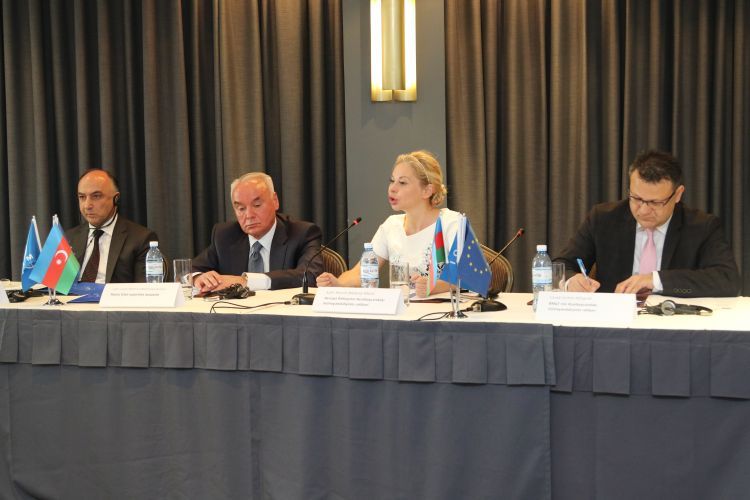
The International Organization for Migration (IOM) Mission in Azerbaijan held an event dedicated to the kick-off of the project “Enhancement of National Capacities to Combat Human Trafficking in Azerbaijan (ENCT)”, funded by the European Union and co-funded by the IOM International Development Fund.
This project, aimed at combating human trafficking and related transnational organized crime by applying a comprehensive and multidisciplinary approach, is implemented in close cooperation with the Government of Azerbaijan. The overall objective of this project is to strengthen the capacity of the Government of Azerbaijan in effectively countering human trafficking as well as protecting victims of human trafficking.
As Eurasia Diary reports, Deputy Minister of Foreign Affairs of Azerbaijan Mahmud Mammad-Guliyev opened the event

He stated that Azerbaijan plans to sign a new agreement on strategic cooperation with the EU, which will play its role in developing relations and will raise cooperation in this direction to a new level.
"Azerbaijan and the International Organization for Migration open a new page in cooperation, I hope that the initiatives presented in the framework of cooperation will be successful," the deputy minister said.
According to him, one of the most important priorities of Azerbaijan is the fight against human trafficking: "Azerbaijan pursues a consistent policy in this direction to prevent human trafficking and protect people."
"Azerbaijan is interested in an expanded dialogue with Europe in this area," Mammad-Guliyev said.
Then, the head of the EU Delegation in Azerbaijan, Ambassador Malena Mard, stated that combating human trafficking is a priority for the EU and the main issue in the context of ensuring security.

"This project is part of the overall strategy in which we support Azerbaijan. EU and Azerbaijan already have the experience that will help to successfully implement this project," Mard said.
Heydar Heydarov, Chief of the Main Department on Combating Trafficking in Human Beings, spoke in details on the efforts of the Azerbaijani government aimed at combating human trafficking in the country.

"The constant development of international cooperation is always on the agenda." Azerbaijan has strengthened cooperation with the International Organization for Migration, and this project is a good example. We hope that this project will contribute to the defeat of trafficking, "Heydarov said.
Chief of the IOM Mission in Azerbaijan Serhan Aktoprak spoke about the migration processes in the world. He said that migration has never been this massive in the history of mankind. He assured that migration plays a huge role in the economy of a single country, and that it can bring benefit to the host country. At the same time, the migration process has its negative sides. For example, organized crime, which Eastern Europe and the countries of Central Asia are now actively facing. Human trafficking is one of the components of this process. Every year, tens of thousands of people become victims of trafficking only according to official data, but in fact, the figures are even greater.
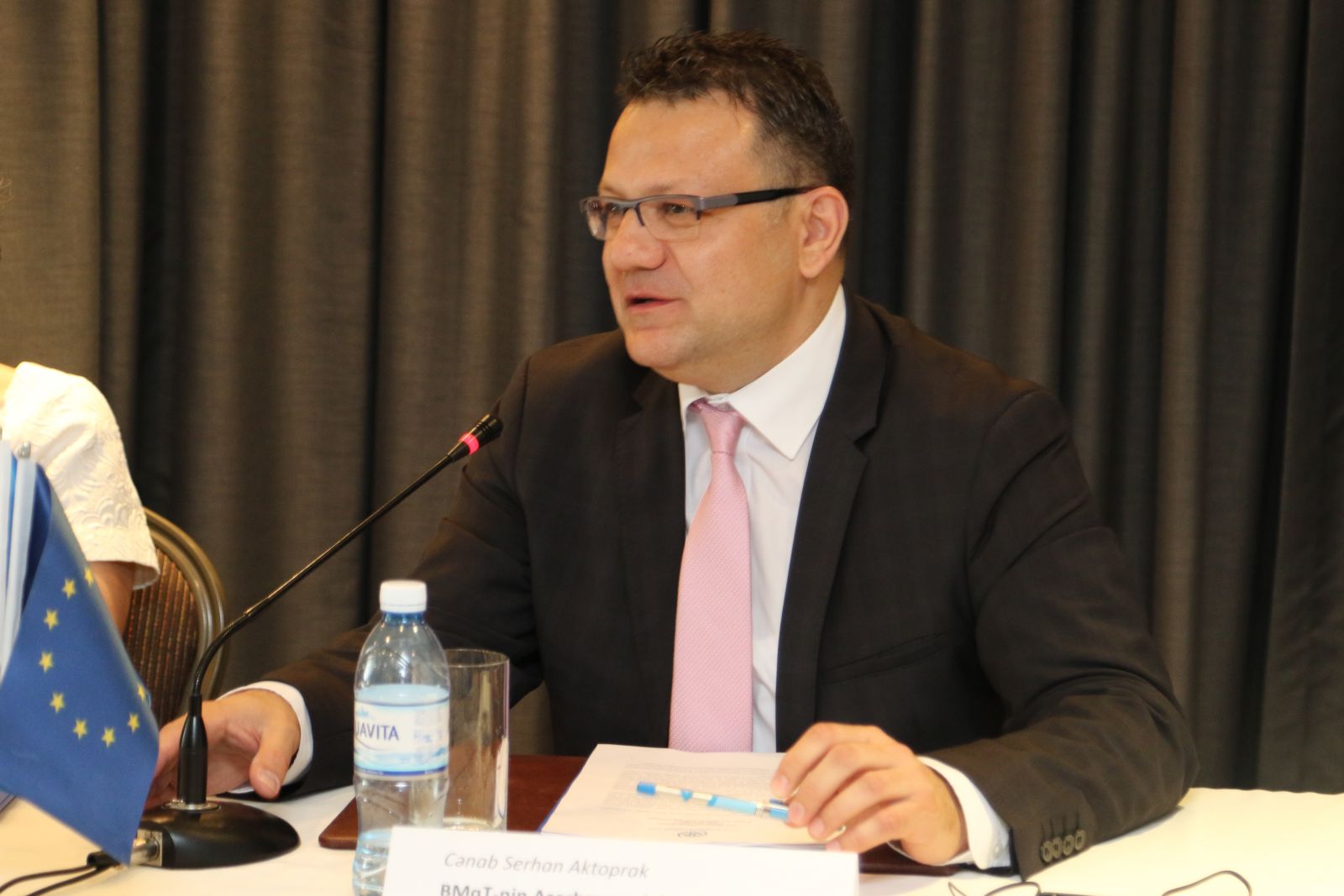
It should be noted that the project “Enhancement of National Capacities to Combat Human Trafficking in Azerbaijan (ENCT)” is designed for two years and will last until November 2018. The aim of the project is to strengthen the capacity of the Government of Azerbaijan to effectively counter trafficking in human beings and protect the rights of victims of this process.
The project is implemented jointly with the Government of Azerbaijan and aims to support the state's efforts and reforms planned in the framework of the Institutional Reform Plan-2 of the Institutional Development Program of Azerbaijan.
One of its main tasks is to help in the organization and creation of judicial powers, which will increase the degree of prosecution of traffickers, protect the rights of not only victims of human trafficking, but also potential victims. The second main element of the project is the fight against illegal border crossing by migrants and victims of trafficking, identification of victims at the centralized and regional levels, their direction and support.


.jpg)

.jpg.jpeg)