
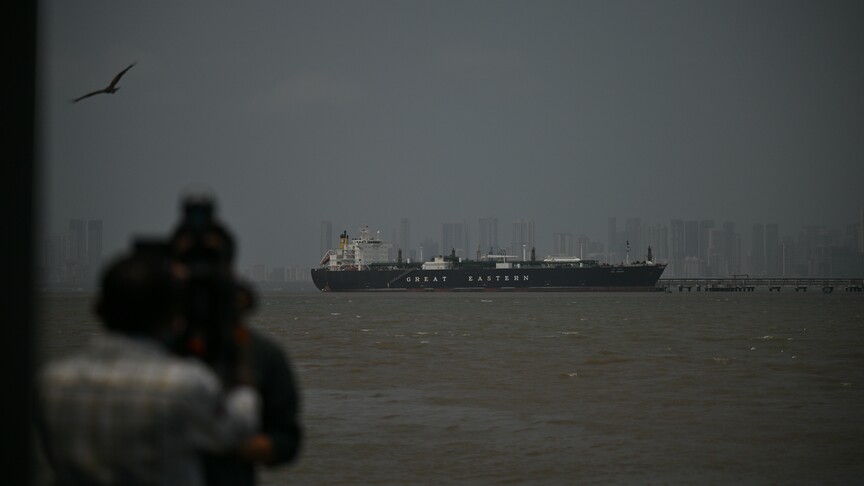
Ongoing instability in the Strait of Hormuz is reshaping global markets, extending the crisis beyond oil and natural gas into a new dimension of trade conflict targeting strategic raw materials.
Since Feb. 28, when military activity in the region began to escalate, international commodity markets have witnessed notable price increases in critical minerals.
These minerals, which are used across a wide range of applications from electric vehicle batteries and wind turbines to artificial intelligence chips and advanced military systems, constitute the backbone of global supply chains.
Rising demand for these materials increased supply security concerns and market fragility.
- Hormuz seen as key bottleneck for sulfuric acid supply
Sulfuric acid, used in mineral separation, impurity removal and various chemical processes, is considered an indispensable component of production across multiple sectors, particularly in mining.
The Strait of Hormuz, at the center of the crisis, is not only a key energy corridor but also a critical transit route for global sulfur supply.
According to the US Geological Survey, the Middle East accounts for approximately 24% of the world's sulfur supply.
As the strait also serves as a key route controlling sulfur flows to processing hubs in Asia, developments in the region are amplifying market impacts. Following the escalation in tensions, sulfur prices initially rose by 10–15%, while delivered prices increased more sharply due to rising logistics costs.
Rising costs have also affected sulfuric acid markets, with the impact particularly visible in Indonesia, which produces more than 60% of global nickel.
Meanwhile, China is reportedly preparing to halt sulfuric acid exports from May, raising concerns over supply risks for industries ranging from nickel and copper to fertilizers.
Experts warn that Indonesia's reliance on sulfur imports could disrupt operations, as logistical constraints limit short-term alternatives, putting mining output at risk.
Sulfuric acid, a key input in nickel production, is essential for electric vehicle batteries.
Battery-grade nickel requires 8-10 tons of sulfur per ton, and strict purity standards limit the use of recycled alternatives, keeping the sector dependent on primary sulfur supply.
Indonesia imports around 75% of its sulfur from the Middle East, while China's export restrictions add further logistical pressure on its battery hub ambitions.
Aluminum markets hit by Gulf supply pressures
Aluminum markets are also under pressure as output constraints in Gulf countries disrupt regional shipments. According to the World Economic Forum, the Middle East accounts for around 9% of global primary aluminum production outside China.
The withdrawal of more than 150,000 tons from London Metal Exchange warehouses signals growing market anxiety, with export constraints starting to affect construction, transport and renewable energy sectors.
Experts warn that aluminum producers with limited raw material integration are particularly vulnerable to supply pressures in the Gulf.
Further, helium, a critical gas used in sectors ranging from healthcare to advanced technology, has come back into focus amid supply disruptions.
Technical issues at Qatar's Ras Laffan facility, which accounts for roughly one-third of global supply, combined with the closure of the Strait of Hormuz, have unsettled markets.
Used for ultra-low temperature cooling in semiconductor production and in MRI systems in healthcare, potential supply disruptions could directly impact both high-tech manufacturing and medical diagnostics.
'Confidence in global supply chains shaken'
Anthony Milewski, founder of The Oregon Group and a mining and commodities market analyst, said the Middle East crisis and China's restrictions on sulfuric acid exports are causing significant disruptions across the global system.
He described sulfuric acid as one of the most fundamental "workhorse chemicals" of modern industry, playing a central role in processing critical minerals such as copper, nickel, cobalt and uranium.
Without it, Milewski said, a large share of the world's low-grade ores could not be processed economically, making it indispensable to global mining operations.
Milewski highlighted Indonesia as one of the most vulnerable countries, noting that it produces more than 60% of global nickel while importing around 75% of its sulfur from the Middle East.
He said sulfur prices have surged by roughly 70% following tensions in the Strait of Hormuz, warning that limited stockpiles estimated at just one to two months in some facilities could quickly lead to production disruptions.
He added that the impact is not limited to Asia, pointing to Chile, the world's largest copper producer, where sulfuric acid supply constraints have driven prices sharply higher.
Chile, which imports more than 1 million tons of sulfuric acid annually, has seen prices rise by around 44% in a short period, directly increasing production costs.
Milewski warned that these developments signal a deeper structural shift rather than a temporary market disruption.
He noted that the crisis underscores the growing fragility of global supply chains, particularly for materials critical to energy, defense and advanced technologies.
'Raw material crisis could disrupt industrial production'
Mehmet Yilmaz, head of the Turkish Miners Association, warned that even minor disruptions in key inputs such as sulfur, iron ore and graphite passing through the Strait of Hormuz could affect production across sectors from agriculture to high technology.
He said the situation goes beyond energy security, describing it as a multi-layered raw material crisis affecting all stages of global industrial production.
Yilmaz noted that materials such as aluminum, graphite and sulfur should no longer be seen as ordinary commodities, as they play a critical role in areas ranging from green transition to food security, with price fluctuations directly impacting economies.
Citing S&P Global data, he added that developments in the Strait of Hormuz have increased global mining costs by an average of 11.3%, driven largely by higher freight and diesel prices.
Yilmaz said Türkiye's industrial production relies heavily on imported intermediate goods, which account for around 68% of total imports, making the country vulnerable to disruptions in the Strait of Hormuz.
However, he added that growing demand for secure and nearby supply could create opportunities for Türkiye to stand out with its mining potential.
He warned that prolonged uncertainty could weaken investment appetite and hinder financing for new projects, stressing the need to accelerate domestic exploration and production to strengthen economic resilience.



.jpg.jpeg)