
In the early 19th century, wealthy and influential Azerbaijanis began providing their children with Western-style education. By the mid-century, a growing number of Azerbaijani intellectuals educated in Europe had emerged. These intellectuals were eager to raise public awareness and promote enlightenment among the local population. However, the circumstances were challenging. Spreading ideas of enlightenment under the repressive rule of Tsarist Russia was far from easy.
By the late 19th century, reform signals from Tsarist Russia created openings that Azerbaijani intellectuals seized upon. They established local schools, founded associations, produced new writings, nurtured theater, and launched a cultural-educational movement. In this transformative period, one of Azerbaijan’s foremost intellectuals, Hasan Bey Zardabi, published the country’s first newspaper: Ekinci. Released on 22 July 1875, Ekinci marked the dawn of Azerbaijani press and heralded a new era in the nation’s socio-political and cultural life. Although ostensibly aimed at teaching modern agricultural techniques to farmers, Ekinci became a vessel of enlightenment—educating, guiding, and mobilizing public consciousness. It spurred a lineage of publications including Ziya, Ziyayi-Qafqaziye, Keşkül, and Füyuzat.
Later came the famous era of Molla Nesreddin magazine, during which the intellectual momentum of the intelligentsia carried Azerbaijan toward the idea of a republic—an ideal that soon materialized. The Azerbaijan Democratic Republic enabled a press environment reflective of political pluralism: official voices like Azerbaycan Gazetesi, where the eminent thinker Ceyhun Hacıبیli served as chief editorialist, emerged alongside other newspapers such as İstiklal, Yeni Hayat, Kurtuluş, and magazines like Şelale, Zembur, and Mektep ve Hayat. However, this period was cut short.
With the Soviet arrival came renewed censorship: Azerbaijan’s vibrant political and press life collapsed. Many free thinkers were killed, imprisoned, or exiled. Yet, despite strict control, Azerbaijani-language media persisted—transforming Azerbaycan Gazetesi into Kommunist. Publications such as Sovet Köyü, Azerbaycan Gençleri, Bakü, and Edebiyat, and magazines like Yıldız, Bilim ve Hayat, Azerbaycan, and Pioner continued under fierce ideological supervision. Newspapers in Russian—Bakinski Raboçiy, Vışka, and İzvestiya Azerbaijan—also proliferated. Censor deletions in print were represented by blank spaces—eventually becoming a symbol of Soviet-era Azerbaijani media.
After the Soviet Union's collapse, Azerbaijan’s post-independence political transformation dismantled state control of the press. Azerbaycan Gazetesi reclaimed its old name, and new newspapers like Meydan, Cumhuriyet, Sabah, Yeni Müsavat, 525-ci qəzet, and Şark, along with bilingual Ayna-Zerkalo, emerged. In 1998, national leader Heydar Aliyev issued a landmark decree freeing the press from censorship, catalyzing the rise of critical journalism, advertising markets, and independent media regulatory bodies—leading to the dissolution of the Ministry of Press and Information and the creation of the self-governing Press Council.
In the past five years, Azerbaijani media has undergone a new transformational phase: more conceptual, more assertive. The victory in Karabakh amplified media influence. While the guns fell silent, the news front remained engaged. Despite decades of one-sided coverage, for the first time, many international outlets began to depend on Azerbaijani sources to understand events related to the country. In short course, before reporting on Azerbaijan, international media now consult the Azerbaijani press. This shift is the greatest achievement of the nation’s 150-year media journey: domestic media has never ceded information control to foreign media conglomerates. Citizens have consistently received news from local sources.
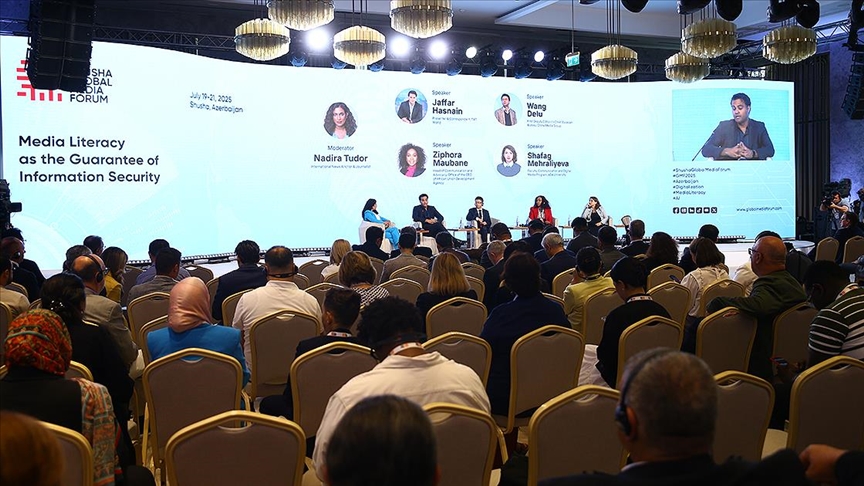
Azerbaijani media is embracing digital transformation. At the Third Shusha Global Media Forum, representatives from 52 countries and 80 media outlets, along with international institutions, converged in what is now a globally recognized media discussion platform. The 150th anniversary was celebrated in liberated Shusha and Hankendi, with world leaders citing Azerbaijani media and President Ilham Aliyev’s speeches.
At the forum, President Aliyev stated: “Today, Azerbaijani media is strong enough to safeguard state interests. It has successfully refuted baseless accusations with detailed analysis and concrete data. Media not only defends—it also actively engages. That is essential.” Today, Azerbaijani media is widely read, studied, and frequently discussed regarding alignment with national policy. Its resilience proves it has become capable of countering defamation campaigns with strength and clarity—a new reality.
Turkish‑Azerbaijani Media Brotherhood
The 44‑day Patriotic War further reinforced bonds between Turkish and Azerbaijani media. Turkish colleagues—journalists from Anadolu Agency and TRT—stood shoulder to shoulder with local press during frontline reports in Tartar and beyond. Azerbaijan’s Azertac, APA, and Report were present under fire; they reported together.
Following victory, the Shusha Declaration signed by Presidents Aliyev and Erdoğan gave new meaning to media cooperation. In 2022, a joint Turkey‑Azerbaijan Media Platform was established, formalizing collaborative information efforts. During Turkey's catastrophic earthquake, Azerbaijan dispatched rescue planes unilaterally—complete with journalists—and reported alongside Turkish counterparts, sharing loss and hope alike.
In a symbolic statement made at a meeting in Ankara, an Azerbaijani intellectual beautifully remarked: “During the calamity that shook the century, rescue teams came from all over the world—but the poetry and art that arose in its aftermath were created only in Turkish-speaking lands.” This emotional and meaningful bond, combined with professionalism, forms a formidable force—one that defends information integrity and builds cross-border media networks.
When Turkish media influence in Turkic-speaking countries, the Arab world, and Africa combines with Azerbaijani media’s reach in the former Soviet space and Eastern Europe, the result could be a vast geographical news dominance. This isn't just a matter of professional media presence but also a crucial aspect of our states’ information security. Therefore, extending the news agency network and establishing a shared media pool among member states of the Organization of Turkic States is a key future task.
Vusala Mahirgizi, Director General of APA Media Group.
.jpg.jpeg)