
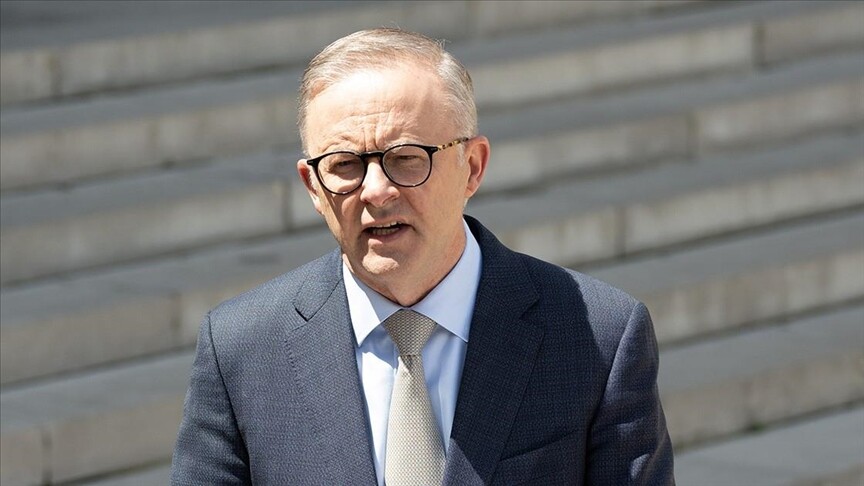
Australian Prime Minister Anthony Albanese said Wednesday that he is "very worried" about escalating tensions in the Middle East after the United States launched fresh airstrikes on Iran in response to the reported downing of a US Apache helicopter that was patrolling over the Strait of Hormuz.
Speaking in an interview with ABC News, Albanese expressed concern over both the humanitarian and economic consequences of the growing conflict, warning that further escalation could have global repercussions.
"We're very worried both about the human impact, of course, that comes with war, but also the economic impact that is having a massive effect on the global economy and will get worse rather than better," he said, according to a transcript released from his office.
Albanese reiterated his government's call for restraint and a reduction in hostilities, saying Canberra wanted to see "a de-escalation" in the region.
He noted that while Australia is geographically distant from the Middle East, the conflict's effects are being felt worldwide through economic disruptions and rising costs.
Referring to the latest US military action, he said President Donald Trump was responding to the reported destruction of an Apache helicopter by Iranian fire. However, he stressed that a lasting peace remained the priority.
"We want to see peace break out in the region in a permanent way," he said, adding that the conflict was not only causing suffering in the Middle East but was also contributing to higher global inflation and economic uncertainty.
His statement came after the US launched strikes on southern Iran.
US Central Command (CENTCOM) said US fighter jets struck Iranian air defense systems and radar sites near the Strait of Hormuz in response to the downing of the US Army Apache helicopter.
Iran’s Islamic Revolutionary Guard Corps (IRGC) said early Wednesday that it launched retaliatory attacks on 21 American military targets at US air and naval bases across the region.
.jpg.jpeg)