
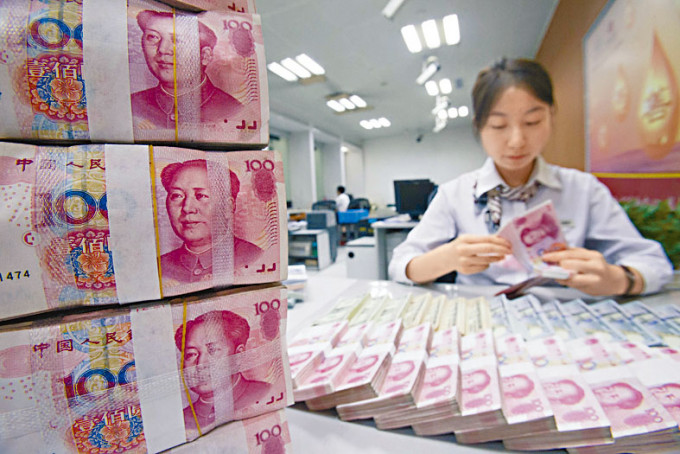
The People's Bank of China (PBOC) kept its key lending benchmarks unchanged on Monday, maintaining a cautious monetary stance even as data showed weakening consumption, investment and credit demand in the world’s second-largest economy.
The one-year loan prime rate, used as a reference for most corporate and household loans, was left at 3%, while the five-year rate, a benchmark for mortgages, remained at 3.5%.
The decision marked the 13th straight month without a change in the loan prime rates and came as policymakers seek to support growth without adding pressure on bank profitability or fueling financial risks.
The rate hold follows a weak set of May economic indicators. Retail sales fell 0.6% year-on-year, the first decline since December 2022, underscoring fragile household demand despite holiday-period spending.
Urban fixed-asset investment also contracted more than expected, falling 4.1% in the January-May period from a year earlier. Real estate investment remained the main drag, dropping 16.2% in the first five months, while manufacturing investment also turned negative for the first time since December 2020.
Industrial output offered some relief, rising 4.5% year-on-year in May, supported by resilient exports and production in policy-backed sectors.
The contrast between stronger industrial activity and softer domestic demand has reinforced concerns over China’s uneven recovery, with factories continuing to show resilience while households and property-related activity remain under pressure.
Credit conditions also point to weak demand for borrowing. New bank lending rose less than expected in May after contracting in April, reflecting the impact of the prolonged property downturn and subdued household appetite for loans.
PBOC Governor Pan Gongsheng said last week that slower loan growth partly reflected a broader shift in financing patterns, as bond and equity financing gain a larger role in the economy.

.jpg)
.jpg)



.jpg.jpeg)