
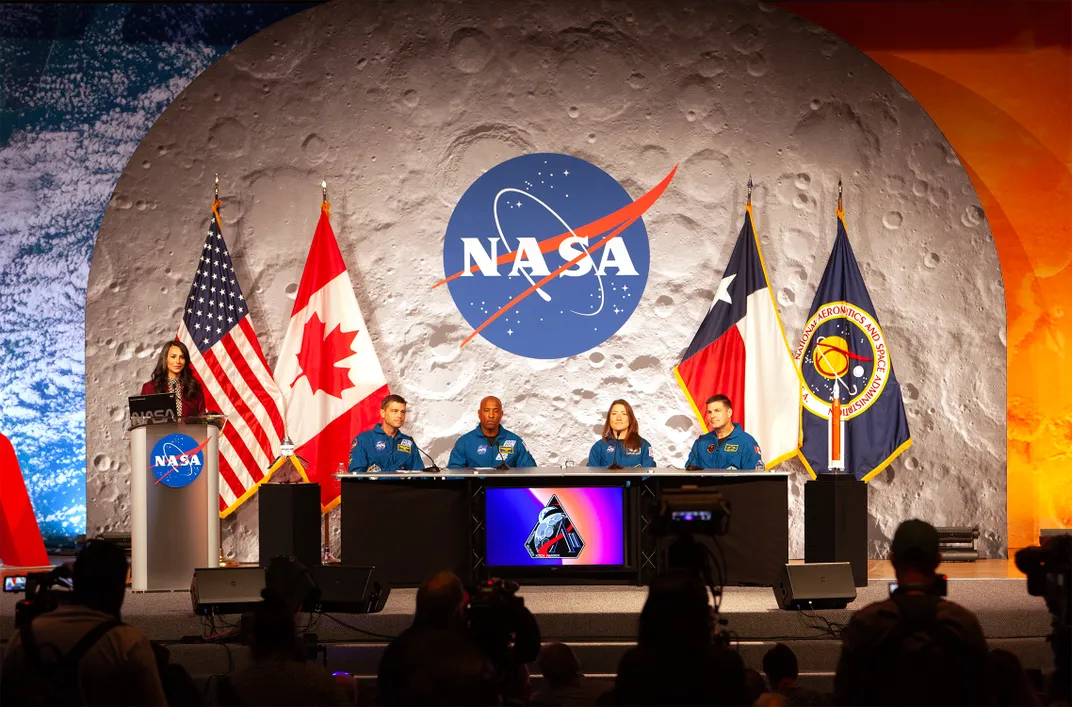
As NASA’s Artemis II crew reflects on the view of Earth from lunar orbit, the message reaches far beyond space exploration. It is a reminder of shared responsibility, one that feels especially timely as Azerbaijan follows COP29 with the upcoming WUF13 in Baku.
Every so often, a moment from space does what speeches and policy papers often cannot: it reminds us, with startling clarity, that the Earth is one fragile home. That is why the images and remarks coming from NASA’s Artemis II mission matter. Launched on April 1, 2026, the four-person crew Reid Wiseman, Victor Glover, Christina Koch and Jeremy Hansen is on NASA’s first crewed lunar flyby in more than 50 years, a mission expected to last about 10 days.
What the astronauts have described is not just scientific observation; it is perspective. As the crew moved through the Moon’s shadow during eclipse viewing, Victor Glover described the Earthshine as strikingly bright and the scene as “unreal,” a reminder that our planet, seen from that distance, is luminous, small and unmistakably shared. The language may be simple, but the meaning is profound: from orbit, borders disappear, and the Earth becomes not a set of competing interests but a common inheritance.
That message resonates far beyond the mission itself. In Azerbaijan, two major global gatherings are placing sustainability and shared urban futures at the center of international attention. COP29 took place in Baku from November 11 to 22, 2024, and the city will also host the thirteenth session of the World Urban Forum, WUF13, from May 17 to 22, 2026, under the theme “Housing the world: Safe and resilient cities and communities.”
Seen together, these milestones point to the same truth: the future of the planet will not be shaped by space exploration alone, but by the choices governments make on Earth. Climate action, housing, resilient cities, energy transition and environmental stewardship are not separate agendas; they are part of the same unfinished project of making the planet livable for everyone. COP29 and WUF13 place Azerbaijan at the heart of that conversation, just as Artemis II places the Earth itself back at the center of ours.
There is also a quieter lesson in the Artemis II mission. At a time when much of the world is defined by polarization, conflict and exhaustion, the sight of the Earth shining against the dark backdrop of space offers a different narrative: cooperation remains possible, and progress is still worth believing in. That is not naïve optimism. It is a practical conclusion drawn from the fact that the planet does not belong to one country, one region or one generation alone.
The real challenge is to act as though we understand that. The astronauts’ view from lunar orbit is beautiful, but it is also demanding. It asks leaders, institutions and citizens alike to think beyond immediate crises and toward the long-term health of the one world we all share.
About the author:
Nick Nwolisa is an Economics Educator, Researcher, and PhD Candidate
Specializing in World Economy, Sustainable Development and Inclusive Economics



.jpg.jpeg)