
(The Independent) - The increasing prevalence of social media means that we often encounter written language characterized by both stylistic variation and outright errors. How does the personality of the reader modulate reactions to non-standard text?
Experimental participants read 'email responses' to an ad for a housemate that either contained no errors or had been altered to include either typos (e.g., teh) or homophonous grammar errors (grammos, e.g., to/too, it's/its). Participants completed a 10-item evaluation scale for each message, which measured their impressions of the writer. In addition participants completed a Big Five personality assessment and answered demographic and language attitude questions.
Both typos and grammos had a negative impact on the evaluation scale. This negative impact was not modulated by age, education, electronic communication frequency, or pleasure reading time. In contrast, personality traits did modulate assessments, and did so in distinct ways for grammos and typos.
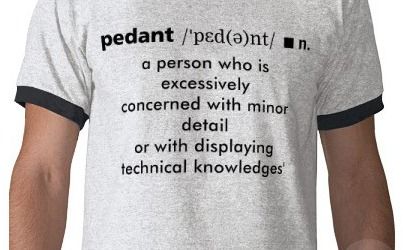
so are you a pedant?
If not, it may say something about you.
A new study, called If You’re House Is Still Available, Send Me an Email: Personality Influences Reactions to Written Errors in Email Messages recruited 83 volunteers and asked them to evaluate 12 replies to an online ad for a new housemate.
Some responses contained errors, and participants were shown one version of each email - either well-written, with typos, or with grammatical errors.
The results showed that both typos and "grammos" (grammar errors) had a negative impact on the likelihood that a respondent would accept the sender of the email as a housemate - and that introverts tended to judge typos more harshly than extroverts.
In addition, less agreeable people were tougher on grammar errors. Overall people tended to judge typos more harshly than errors in grammar.
The primary contribution of the current study is the finding that personality traits influence our reactions to written errors… Although personality traits have been linked to variation in production, particularly the use of specific lexical items, this is the first study to show that the personality traits of listeners/readers have an effect on the overall assessment of variable language.









.jpg.jpeg)