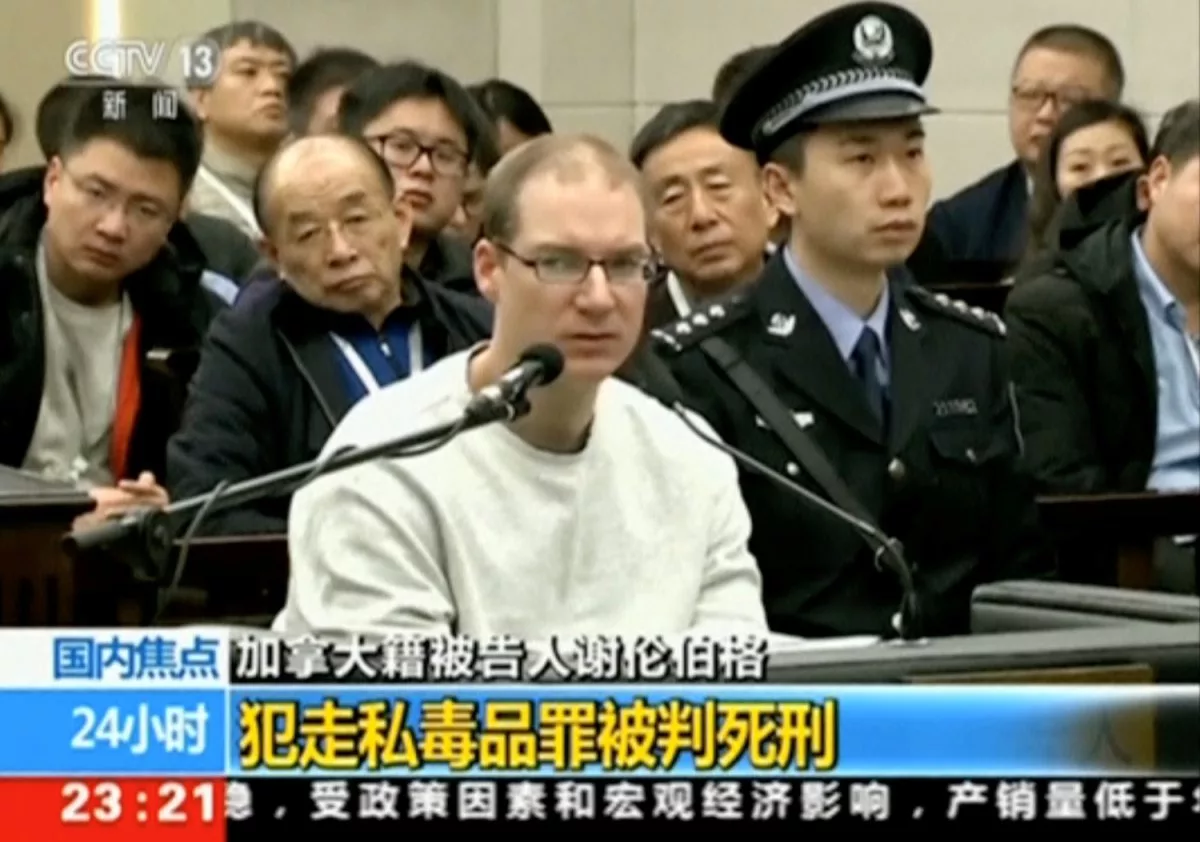
China’s highest court has overturned a death sentence against a Canadian man convicted of drug smuggling, a sudden reversal in a case that has been a years-long source of diplomatic friction between Beijing and Ottawa.
The case of Robert Lloyd Schellenberg was one of several involving Canadians detained in China that the Canadian government condemned as “hostage diplomacy”.
Originally sentenced to 15 years in prison, Schellenberg received a death sentence after a retrial in 2019 that came weeks after a top Chinese executive, Meng Wanzhou, was arrested in Canada.
On Friday, the Supreme People’s Court, struck down the lower court’s sentence, according to Zhang Dongshuo, one of Schellenberg’s lawyers. A Canadian official familiar with the situation, who requested anonymity in order to comply with strict privacy considerations, confirmed that the court had overturned the death sentence.
Canada’s foreign ministry, known as Global Affairs Canada, said it was aware of “a decision” by the Chinese Supreme People’s Court and added that it would continue to support Schellenberg and his family but did not offer any details.
“Canada has advocated for clemency in this case, as it does for all Canadians who are sentenced to the death penalty,” it said in a statement.
Zhang said the case would be retried but that it was unlikely that his client would be given the death penalty again.
The development comes a few weeks after Prime Minister Mark Carney visited President Xi Jinping in Beijing. There, the two sides agreed to lower some tariffs on each other’s goods and hailed a “new strategic partnership”.
Angeli Datt, research and advocacy coordinator at Chinese Human Rights Defenders, said that human rights experts have long suspected that Schellenberg’s death sentence was the result of geopolitical tensions between China and Canada.
“It’s hard to ignore the timing of Carney’s recent visit and this development on his case,” she said. “A retrial is a chance to grant him a fair trial.”
Carney’s trip last month signalled a thaw in a relationship that had been frosty ever since Canadian authorities in late 2018 arrested Meng, the chief financial officer of the Chinese telecommunications giant Huawei and the daughter of the company’s founder, at the request of the United States.
Days after Meng’s arrest, China detained two Canadians: Michael Kovrig, a former diplomat, and businessman Michael Spavor.
Weeks after that, Schellenberg was given a death sentence. He had appealed his 15-year prison sentence for smuggling methamphetamines. But during his retrial, against the backdrop of the sharply increased tensions between China and Canada, the court sided with prosecutors who called for capital punishment.
In 2021, Spavor and Kovrig were released after Meng was allowed to return to China in exchange for admitting wrongdoing in a fraud case.
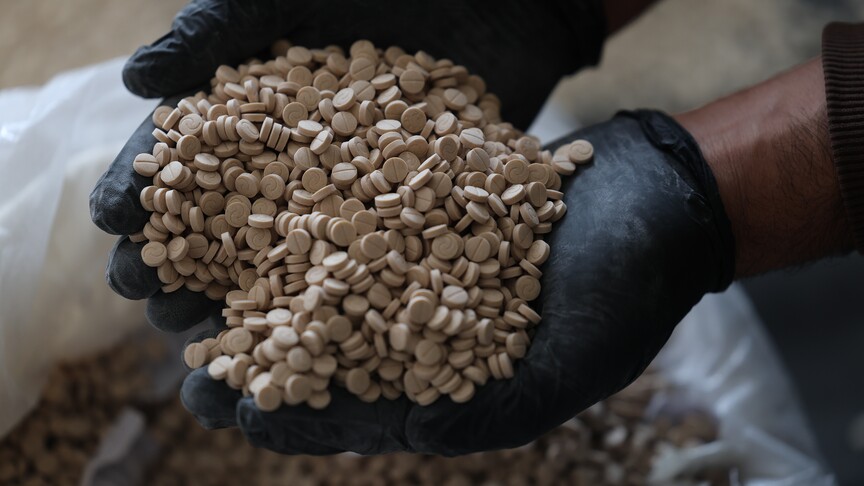
But Schellenberg, who had been convicted of working with others to smuggle 220 kilogrammes of methamphetamines, remained in China. In 2021, a court rejected an appeal of his case and upheld the death sentence. The next step was review by the Supreme People’s Court, as required by Chinese law.
‘Case isn’t over’
After Carney’s visit, Zhang said he had gone into Friday’s hearing more optimistic. He said that “based on recent developments, there was greater hope” that the court would reject the death penalty for Schellenberg.
Zhang said that the Supreme Court had overturned death sentences before, but he was surprised that it ordered a retrial rather than issue a new sentence.
He said that given the seriousness of his previous sentence, it was unlikely that Schellenberg would be acquitted. He saw Schellenberg before the hearing and said that his client seemed to be in a “relatively stable condition”.
“His case isn’t over,” Zhang said.
China leads the world in executions, according to human rights groups. Last year, the country executed four Canadian citizens for drug-related charges.
In recent years, Carney’s predecessor, Justin Trudeau, and senior members of his cabinet had criticised China publicly over human rights issues.
But faced with President Donald Trump’s onslaught of tariffs on Canadian goods, Carney has shifted his country’s stance toward China, which during his visit to Beijing he described as a more “predictable partner”.