
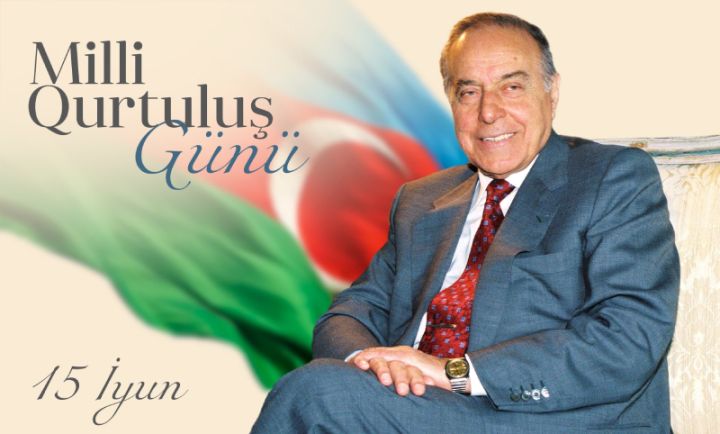
Thirty-three years ago, on June 15, 1993, now celebrated as National Salvation Day, Azerbaijan began its path away from the threat of losing its independence and facing national fragmentation. On that day, at the persistent request of the Azerbaijani people, National Leader Heydar Aliyev returned to power for the second time, assuming the mission of leading the country out of a deep crisis and becoming the savior of Azerbaijani statehood.

Konul Nurullayeva, Member of the 6th and 7th convocations of the Milli Majlis of the Republic of Azerbaijan, provides her analysis for EDnews
Having restored its independence in 1991, Azerbaijan was operating in an extremely complex geopolitical environment. Armenia's military aggression continued, Azerbaijani territories were being occupied, and the country's socio-economic situation was deteriorating. Under such circumstances, effective governance, policies based on national interests, and strong leadership were urgently needed.
However, the Popular Front–Musavat government that held power in 1992–1993 was unable to meet this historic responsibility. Serious shortcomings emerged in state administration, and political inexperience placed national interests at risk. Internal power struggles, disorder within the armed forces, economic decline, and chaos in the law enforcement system pushed the country toward instability and ungovernability.
During this period, military setbacks on the front lines increased, and Azerbaijani territories were occupied one after another. At the same time, the growing activity of various armed groups further intensified tensions within the country.
The events in Ganja in June 1993 clearly demonstrated that Azerbaijan was on the verge of civil war and national disintegration. The strengthening of separatist tendencies in various regions raised serious concerns about the country's future. In such circumstances, the hopes of both the people and the political forces committed to preserving statehood rested with Heydar Aliyev. Inviting the experienced statesman back to Baku had become a historical necessity. His election as Chairman of the Supreme Soviet of Azerbaijan on June 15, 1993 marked a turning point in the nation's history.
Following Heydar Aliyev's return to power, restoring stability across the country became the immediate priority. The threat of a coup was averted, civil confrontation was brought to an end, and the functioning of state institutions was reestablished. Significant steps were also taken to strengthen Azerbaijan's standing in the international arena.
As a result of his far-sighted policies, political stability was achieved and the foundations for economic development were laid. The signing of the "Contract of the Century" in 1994 played a crucial role in integrating Azerbaijan into the global economy. The state-building process accelerated, and a foreign policy rooted in national interests was established.
This political course was successfully continued by President Ilham Aliyev. Azerbaijan's economic strength grew, its Armed Forces were modernized and strengthened, and the country emerged as a leading regional power. As a result, Azerbaijan achieved a historic victory in the 44-day Patriotic War in 2020, and in 2023 fully restored its state sovereignty across its entire territory.
Today, large-scale reconstruction and development projects are underway in Karabakh and Eastern Zangezur. Cities and villages liberated from occupation are being rebuilt, and former internally displaced persons are returning to their ancestral homes. The course of history has once again demonstrated that the decision made in June 1993 was a defining moment for Azerbaijan's future. The path that began with National Salvation transformed the country from political crisis to stability — and from a state confronted with occupation into a victorious nation that has fully restored its territorial integrity and sovereignty.
.jpg)



.jpg.jpeg)