
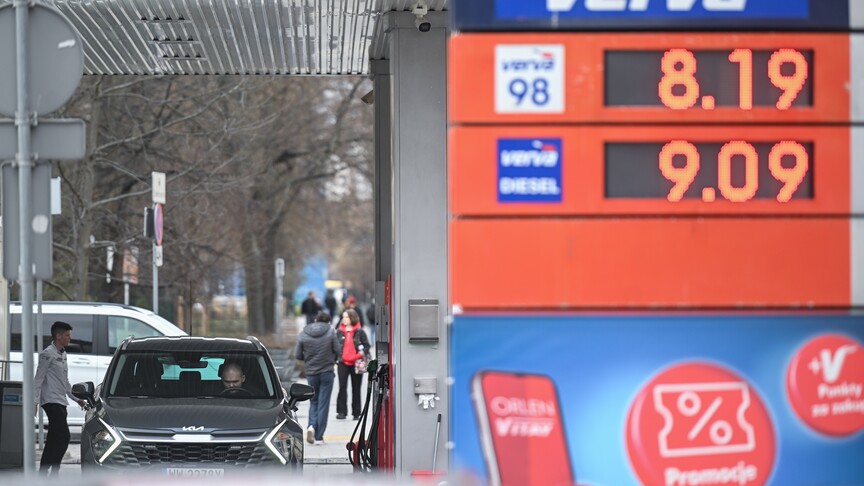
Poland will phase out emergency fuel price controls introduced during the spring energy crisis this summer, Prime Minister Donald Tusk announced on Saturday.
Speaking in the town of Lomza, Tusk said the government expected tensions linked to the Middle East conflict and its impact on global oil markets to ease, allowing fuel prices to return to more normal levels.
The government has already extended reduced value-added tax (VAT) rates and fuel price caps until the end of June but indicated that the current package will not continue indefinitely.
"We had the cheapest fuels in Europe throughout this crisis, but we will be finalizing this project this summer," Tusk told reporters.
The announcement marks the beginning of the end for one of the most extensive market interventions undertaken by the Tusk government since returning to power.
In March, the government unveiled a package designed to shield households and businesses from soaring fuel costs triggered by disruptions to global oil supplies following the start of the armed conflict involving Iran.
The measures included cutting VAT on fuel from 23% to 8%, reducing excise duties to the minimum level permitted under EU rules, introducing daily maximum prices for petrol and diesel sold at filling stations.
Finance Minister Andrzej Domanski said at the time that the measures would cost the state budget around 1.6 billion złotys ($435 million) per month in lost revenue.
While the VAT reduction and price caps have been repeatedly extended, the excise-duty cut has already been allowed to expire. Under the latest decision, the remaining measures will stay in force until the end of June.
Opposition politicians from the conservative Law and Justice party criticized the government for acting too slowly and argued that farmers and transport companies had already absorbed significant fuel costs before the measures took effect.
The measures helped Poland maintain some of the lowest fuel prices in Europe during the crisis.
.jpg.jpeg)