
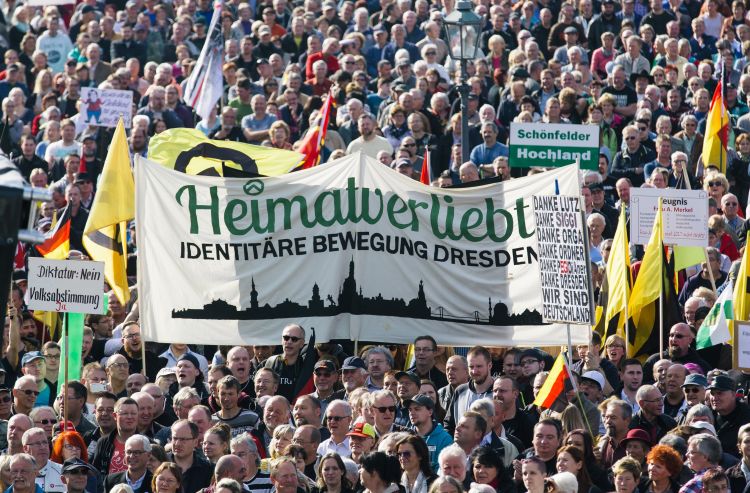
Contrary to popular belief, fears about the European Union in Germany are not simply a generalised anxiety, but a response to concrete concerns. This is according to research conducted as part of a major multi-national project on the politics of fear and populism in Europe.
Undertaken by Demos, Britain’s leading cross-party think tank, the findings suggest that most Germans are concerned about losing social security (53%), increasing payments to the EU (52%), job losses (45%) and the loss of German culture and national identity (42%).
Regarding the degree of concern, Demos found that education levels matter. For instance, the more educated citizens reported significantly less fear regarding the EU. Women and those from East Germany also tended to have higher levels of fear than men and those from the West of the country.
“It is important to understand and address concrete fears about the EU in Germany,” said Christine Hübner, lead researcher for the study. “Once again we see how much education matters for how citizens perceive the EU, and that is not just higher education: at any level, the more educated, the less afraid Germans are.”
The findings also suggest that concerns about Germany’s future in the EU are not directly related to requests for Germany to leave the EU. Only one in six respondents wished for Germany to leave the EU.
In contrast to other countries included in the study, particularly the United Kingdom, France and Sweden, Germans remain positive about the EU in general. A quarter of respondents would like to see Germany promote further European integration. One in six Germans want their government to work for the formation of a single European government.
“Our research shows that fear, in all its manifestations, is becoming a consistent theme across Europe – but equally so are we seeing a breakdown of trust in between citizens and their representatives across many member states,” said Sophie Gaston, head of International Projects at Demos. “The German study shows that there is clearly a more concrete basis for many of these fears, which, whether grounded in reality or not, must be acknowledged and addressed by politicians for trust to be restored. When concerns are considered to be abstract, they are much more easily dismissed.”






.jpg)

.jpg.jpeg)