
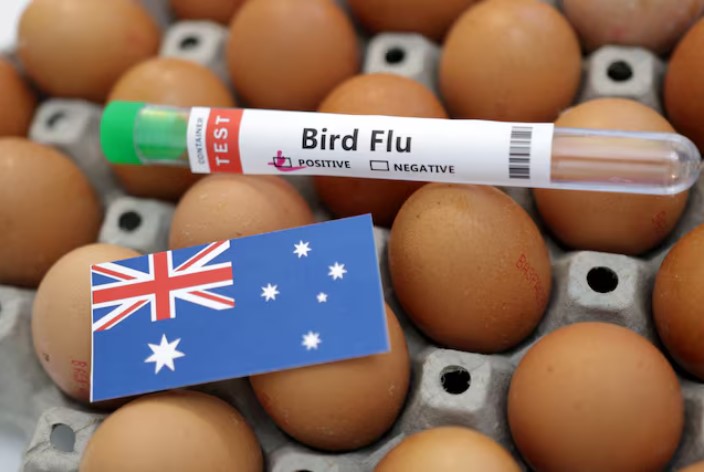
Australia has locked down its largest poultry farm after detecting a second case of the H5N1 strain of bird flu in the country, according to authorities, Australian Associated Press reported on Monday.
“We are working to determine whether or not the H5 bird flu has established in the wildlife or established in Australia, other than these two isolated birds," Agriculture Minister Julie Collins told reporters on Monday.
The second bird, found sick on a remote beach in Western Australia's south coast, has now tested positive for a deadly strain of bird flu.
It comes just two days after the strain was detected in a brown Skua migratory seabird.
The bird flu cases have forced Australia's largest poultry producer to lock down.
“This includes the implementation of a complete lockdown, preventing all non-essential access, across all the company's WA farms and processing operations,” said Inghams Group in a statement.
The two birds were washed up on a remote beach in Western Australia, about 700 kilometers (435 miles) southeast of Perth.
Australia had been the sole continent to avoid the H5 strain of bird influenza that wreaked havoc among animal populations across the globe.
The country has had previous outbreaks of avian influenza in poultry, but historically those have involved other strains, particularly H7 viruses, rather than the globally dominant H5N1 lineage.
Commonly known as bird flu, avian influenza is a contagious virus that predominantly affects bird species and can infect other animal populations, including humans.
The highly pathogenic H5N1 strain of avian influenza was discovered more than 20 years ago. Bird flu strains are classed in seriousness on a scale of pathogenicity -- the capacity of the strain to cause the disease.





.jpg.jpeg)