
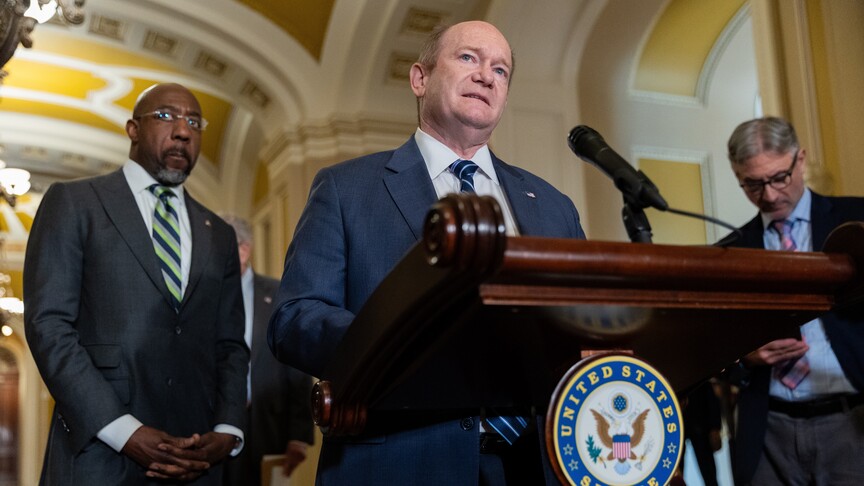
Democratic lawmakers cautiously welcomed the prospect of renewed negotiations between the United States and Iran on Monday but questioned whether the conflict that preceded the agreement was necessary.
The deal, announced by President Donald Trump, is expected to extend a ceasefire, lift the US blockade of Iran, reopen the Strait of Hormuz and launch negotiations on Iran's nuclear program as part of a broader effort to end the conflict.
Democrats largely supported the shift toward diplomacy but argued that the agreement appeared to return both sides to a position similar to where they stood before the war.
Sen. Chris Coons of Delaware described the announcement as a potentially positive development but said major questions remain unanswered.
"If true, President Trump’s announcement is a step in the right direction to end the reckless war he started," Coons said in a statement.
He called for the immediate release of the agreement's text, saying conflicting public descriptions by US and Iranian officials risk creating uncertainty about what has actually been agreed.
"The fact that we have not seen any text of an agreement, while he and Iranian leaders once again say different things about what has been agreed, highlights why we need to see this deal immediately," he said.
Coons questioned whether the Strait of Hormuz would fully reopen to commercial shipping, what role Iran would play in administering the waterway and what mechanisms would govern maritime transit.
He also called for clarity on possible sanctions relief, the future of Iran's enriched uranium stockpile, inspection arrangements and whether the International Atomic Energy Agency (IAEA) would participate in monitoring any future nuclear agreement.
The Delaware senator further asked whether issues repeatedly highlighted by Trump administration officials, including Iran's missile program and regional activities, would be addressed in subsequent negotiations.
"This war has come at a high cost," Coons said, noting that billions of dollars had been spent while 14 American service members were killed and hundreds more wounded.
"While a ceasefire and negotiations are a positive development, so far this war of choice has only made American service members and civilians less safe and left many key questions unanswered or unaddressed," he added.
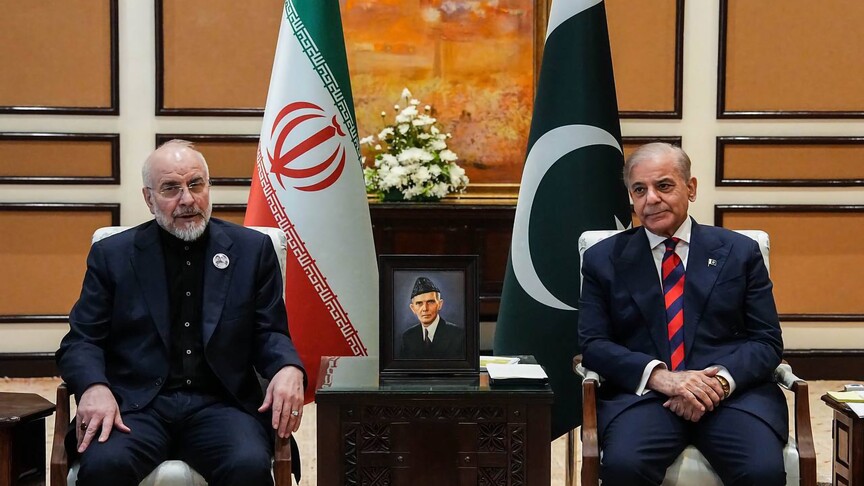
The criticism came after Pakistani Prime Minister Shehbaz Sharif announced early Monday that Washington and Tehran had reached an agreement following intensive negotiations, with both sides declaring an immediate and permanent end to military operations across all fronts, including in Lebanon.


.jpg.jpeg)