
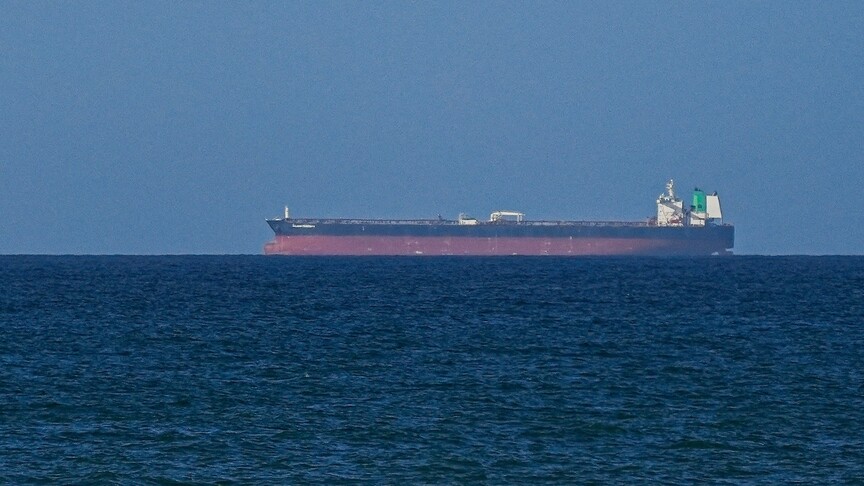
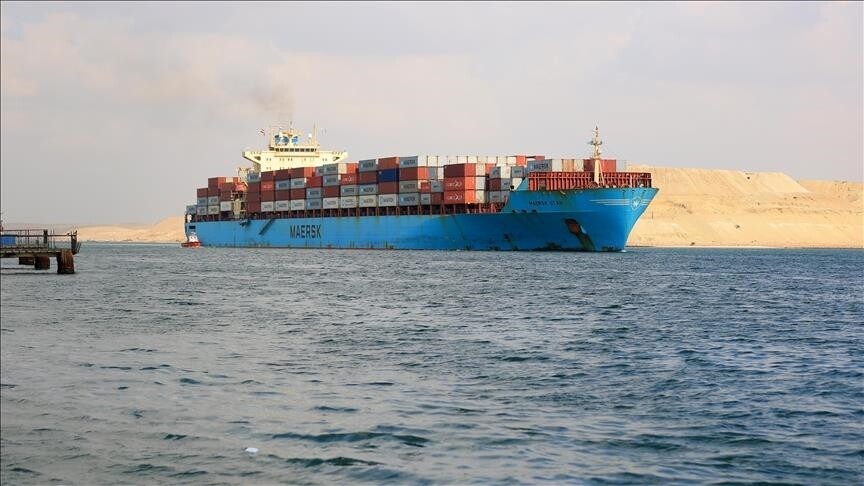
Only two commercial vessels crossed the Strait of Hormuz, a strategic gateway for global trade, over the last two days.
As tensions escalated again in the US-Iran war, the Islamic Revolutionary Guard Corps announced Thursday that the Strait of Hormuz was closed to vessel traffic until further notice.
The military group warned that approaching the strait would be considered "cooperation with the enemy" and ordered that no vessel leave anchoring areas in the Persian Gulf and the Gulf of Oman.
According to information compiled by an Anadolu reporter from data analytics company Kpler, a petroleum tanker named Well Sail, carrying 353,000 barrels of petroleum products, crossed the Strait of Hormuz from Iran to the UAE on June 10.
Before the Islamic Revolutionary Guard Corps announced the closure of the strait Thursday, an empty petroleum tanker named Lucky Chem, traveling from Pakistan to Iraq, crossed the Strait of Hormuz and entered the Gulf.
The tanker crossed the strait via the "Iranian route," which utilizes Iranian territorial waters in the Strait of Hormuz.
Thus, only two commercial vessels crossed the Strait of Hormuz over the last two days, and daily commercial vessel traffic through this gateway fell to its lowest level in nearly five weeks.
Previously, only one vessel crossed the strait on May 7.
On June 9, a total of six commercial vessels, including five loaded ones, crossed the Strait of Hormuz.
Vessel traffic in the strait continued to run over 90% lower compared to pre-war levels.
An average of 130 vessels daily crossed the Strait of Hormuz, which holds a strategic position for global trade, before the war.

.jpg.jpeg)