
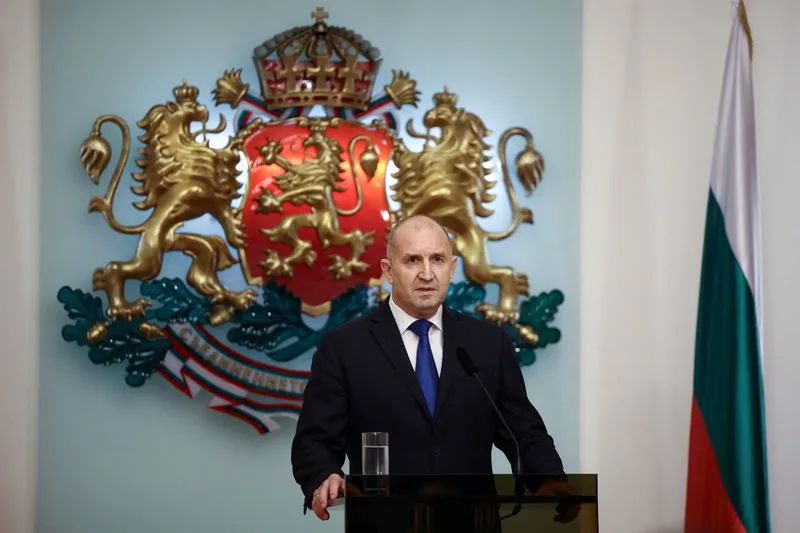
Bulgarian Prime Minister Rumen Radev vowed on Friday to defend his country's national interests as Bulgaria prepares to raise reservations over the European Union's proposed 21st sanctions package against Russia.
Speaking during parliamentary scrutiny, Radev said the government's position was guided by Bulgaria's national interest while remaining consistent with its commitments to the EU and NATO, Bulgarian media outlet Novinite reported.
"I will do this because I defend and uphold the Bulgarian national interest," he said, rejecting criticism that Sofia's foreign policy had weakened relations with its allies.
Radev said Bulgaria would not seek to block the sanctions package procedurally but would introduce reservations over specific measures.
He argued that the country must avoid decisions that could undermine its energy security or expose it to costly international arbitration, referring to potential legal disputes involving Russian oil company Lukoil's operations in Bulgaria.
"The path to avoiding arbitration is not through confrontation, but through dialogue," he said.
The prime minister stressed that Bulgaria's relations with its European and transatlantic partners remain stable, pointing to recent meetings with leaders from Germany, France, and the UK as evidence of continued diplomatic engagement.
On Ukraine, Radev reaffirmed Bulgaria's support for the country's post-war reconstruction but said Sofia would not endorse declarations that it believes could hinder efforts to end the war.
He also confirmed that Bulgaria has no plans to withdraw from its bilateral security cooperation agreement with Ukraine, saying the document does not impose binding military commitments and includes provisions on the rights of the Bulgarian minority in Ukraine, Bulgarian-language education and security in the Black Sea region.
Radev added that discussions are continuing on the future of the Belene nuclear power plant, including possible cooperation with Ukraine on a joint nuclear energy project backed by European financing.
Opposition lawmakers accused the prime minister of taking positions favorable to Russian interests, accusations he rejected, saying Bulgaria's foreign policy seeks to balance its international obligations with its economic and national security interests.
.jpg.jpeg)