
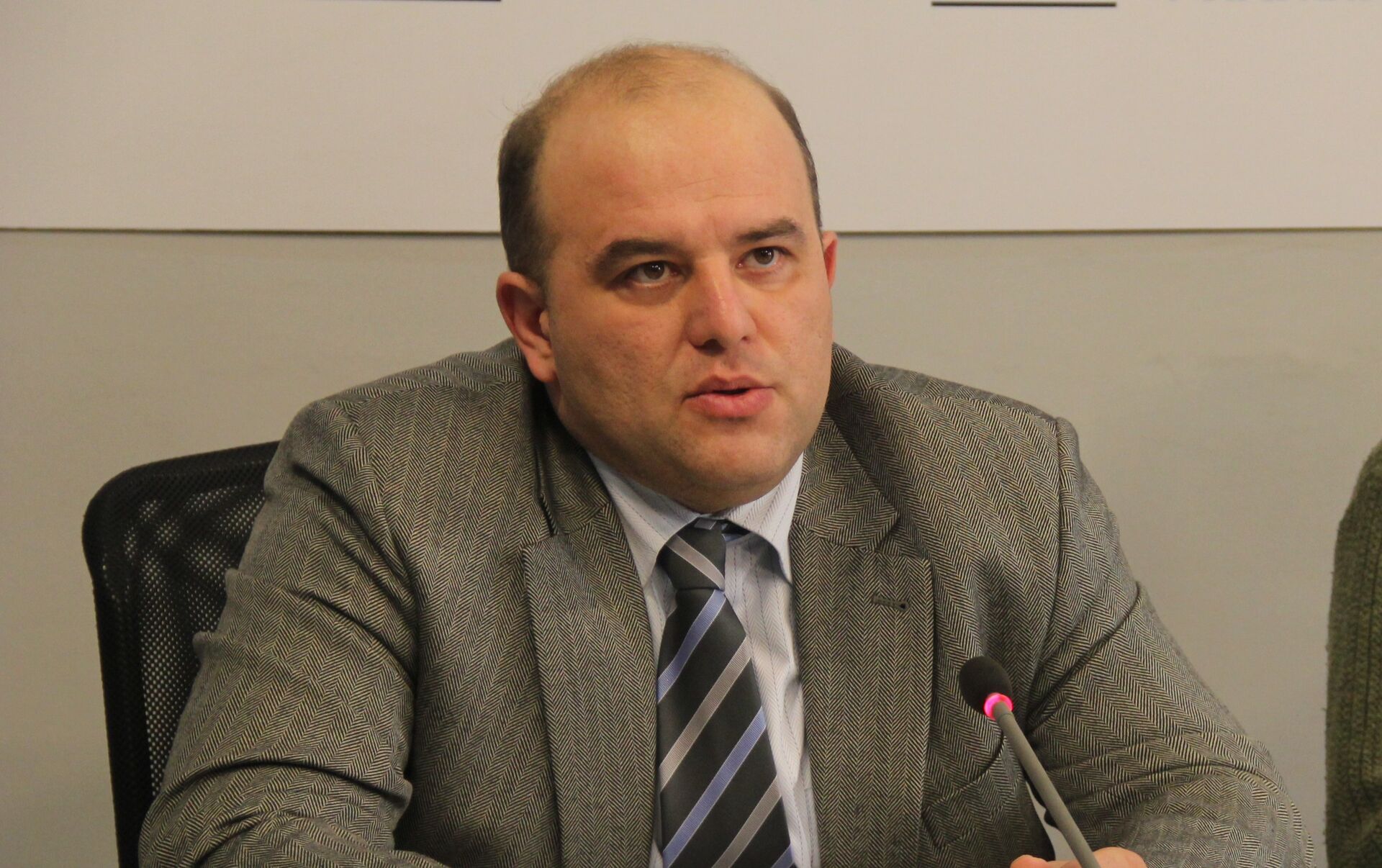
The events of March 1918, which marked one of the most dramatic turning points in the history of the South Caucasus, remain insufficiently studied both regionally and internationally, Georgian political scientist Vakhtang Maisaya said in an interview with EDnews.
According to Maisaya, academic research on the subject remains particularly limited in Georgia, despite the historical and political importance of the events.
“Systematic and fundamental research on the March events is virtually nonexistent in Georgia,” he said.
“There are individual articles and monographs, but serious and large-scale studies are extremely rare. Publications on this topic are more common in Azerbaijan and, to some extent, in Armenia.”
Maisaya noted that one of the main reasons these events receive little international media attention is that they are often treated as distant historical episodes rather than issues with continuing relevance.
“In today’s global information environment, some historical events gradually disappear from public memory,” he said.
“As a result, international media often do not devote the level of attention these events deserve.”
He also emphasized that in Georgia, discussion of the March 1918 events remains largely confined to academic circles.
According to him, institutions such as Tbilisi State University and the International Caucasus University address the subject within academic programs, including courses related to Georgia’s foreign and defense policy.
While some dissertations and individual research projects are underway, Maisaya said these efforts remain insufficient in scale.
In his view, the significance of the March 1918 events is not limited to the past and continues to shape the region’s political realities.
“Current developments in the region, to a certain extent, echo the events of the past,” he said.
“Today, Georgia and Azerbaijan continue to act as strategic partners and allies, which also reflects certain historical continuities.”
Maisaya stressed that broader international recognition of the events will require joint academic and research-based efforts, particularly between countries in the region.
“Research projects, monographs and academic initiatives implemented jointly by Azerbaijan and Georgia can play a key role in this direction,” he said.
“The first steps have already been taken, and such initiatives contribute to the formation of a common historical understanding.”
His remarks underline the continuing challenge of bringing the events of March 1918 into broader academic, media and international discussion — not only as a matter of historical memory, but also as part of the wider regional narrative of the South Caucasus.

.jpeg)


.jpg.jpeg)