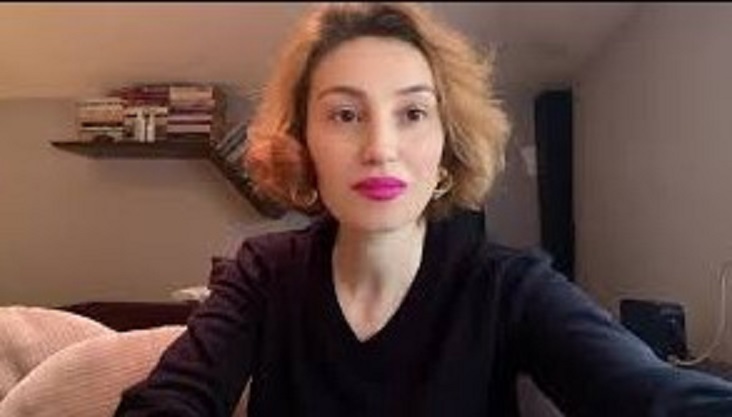
The historical memory of the South Caucasus continues to shape political narratives in the region, but those narratives are often interpreted differently depending on perspective, Armenian expert Natalie Aleksanyan said in a commentary for EDnews.
Reflecting on both the events of 1918 and more recent developments surrounding Karabakh, Aleksanyan said historical and contemporary realities are often viewed through conflicting lenses, which contributes to the lack of broader international understanding.
“These are pages of our history that are interpreted differently depending on sources and approaches,” she said.
“I was not a witness to the events of 1918. I am more inclined to trust what I have seen with my own eyes. But what I witnessed during the 44-day war gave me a deeper understanding of the nature of such tragedies.”
According to Aleksanyan, the events of March 1918 continue to be remembered differently across the South Caucasus, while remaining largely outside international discourse.
“Today, these events are remembered in different ways, but internationally they often remain in the background,” she said.
“This is due to the complexity of the topic and the existence of conflicting narratives. But that is precisely why it is important to return to these pages — not to accuse, but to understand.”
She noted that in Armenia, discussions of such issues are often framed through a predominantly national lens, while meaningful dialogue between differing perspectives remains limited.
In this context, she stressed the importance of broader and more open research.
Aleksanyan also addressed the terminology used in discussions surrounding Karabakh, particularly the use of the word “genocide” by certain political groups in Armenia.
“Today, some circles in Armenia, especially within the opposition, use the term ‘genocide’ in the context of Karabakh,” she said.
“However, this approach raises more questions than it answers.”
She pointed out that President Ilham Aliyev had publicly called on the Armenian population of Karabakh to remain, integrate and continue their lives within Azerbaijan, and said she personally supported that approach.
“I personally wrote an open letter and declared my readiness to support this integration approach,” Aleksanyan said.
“Because I believe there is no alternative to peaceful coexistence.”
At the same time, she acknowledged that developments unfolded differently, and that the events that followed continue to be interpreted in sharply different ways.
“As we saw, people left their homes, and today these events are explained in different ways,” she said.
“Some call it genocide, while others see it as the result of complex political and social processes.”
According to Aleksanyan, these competing narratives continue to influence political thinking and decision-making across the region.
“Memory shapes perception, and perception shapes decisions,” she said.
“But if we want to build a peaceful future, we must look at history not only through the prism of pain, but also through the lessons it offers.”
She added that both the media and academic institutions have an important role to play in creating space for more open discussion, deeper international cooperation and joint research.
In conclusion, Aleksanyan returned to one of the most contested questions surrounding Karabakh and said her own observations did not support the use of genocide terminology.
“My personal observations do not give me grounds to conclude that genocide occurred in Karabakh,” she said.
“The active use of this term by various groups only shows that we are still far from an objective, fact-based assessment.”
She emphasized that both the events of 1918 and the more recent developments in the region should be approached not only emotionally, but also through a scientific and objective lens.
.jpeg)
.jpg.jpeg)