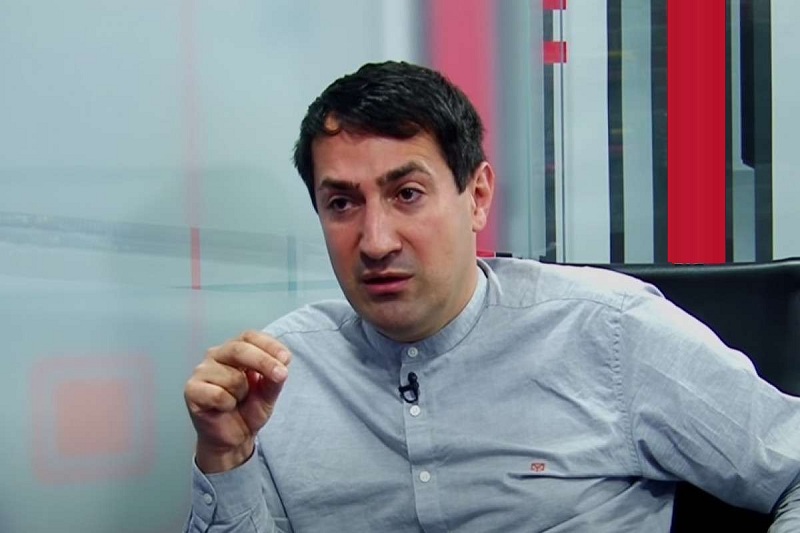

As tensions continue to shape the post-war regional order, EDnews spoke with geopolitical analyst Malik Ayub Sumbal about the Iran-US ceasefire, Pakistan’s diplomatic role, and the future of the Strait of Hormuz.
-What is your assessment of the latest Iran-US ceasefire developments?
In my view, the United States has emerged from this war in a much weaker strategic position than it had anticipated. Washington is now clearly seeking a face-saving way to present the ceasefire as a success, particularly for domestic political purposes. President Donald Trump wants to frame the outcome as a victory, but the broader picture suggests that the conflict became far more costly and complicated for the United States than expected.
From my perspective, Israel succeeded in drawing the US into a confrontation that did not directly serve core American strategic or economic interests. The war has imposed serious financial, military, and political costs, and Washington now appears more interested in managing the fallout than prolonging the confrontation.
- What do you see as the biggest setback for the United States?
One of the most significant setbacks has been the reputational damage to American military prestige and technology. The perception of US air power, especially advanced platforms such as the F-35, has come under increased scrutiny during this conflict. Whether fairly or unfairly, any suggestion that such systems have become vulnerable in combat can affect global confidence in them.
This matters because military technology is not just about battlefield use, it is also about perception, deterrence, and export credibility. If doubts continue to grow, it could have consequences for future arms sales and for the broader image of American defense superiority.
- How has Pakistan played a role in these developments?
Pakistan has played an important role through quiet diplomacy and backchannel engagement. Because Islamabad maintains working relations with Iran, Saudi Arabia, and other regional actors, it is in a position to facilitate communication at moments of high tension. That gives Pakistan a certain diplomatic relevance that has become increasingly visible during this crisis.
Pakistan also has a direct national interest in avoiding a wider regional war. It shares a border with Iran and cannot afford prolonged instability in its immediate neighborhood. Any broader conflict would carry serious implications for Pakistan’s security, economy, and regional environment.
That is why Islamabad has approached this situation with a high degree of seriousness.
- What does Iran want moving forward?
Iran’s primary objective now is to secure guarantees. Tehran does not appear interested in a short-term pause that could simply lead to another round of confrontation. It wants any future arrangement to include credible, enforceable assurances that the conflict will not simply restart under a different form.
At the same time, Iran appears to believe it now holds greater leverage, particularly in relation to the Strait of Hormuz.
In my assessment, the strategic future of the Strait will be shaped more by Tehran’s decisions than by Washington’s pressure. The United States may continue to project power, but Iran has shown that it retains the ability to influence one of the most sensitive maritime chokepoints in the world.
That gives Tehran significant negotiating power going forward.
- How would you describe Pakistan-Iran relations in this context?
Pakistan and Iran have deep and historic ties that go far beyond formal diplomacy. There are strong people-to-people, cultural, religious, and social links between the two countries. That gives Pakistan a level of trust and access that many outside actors do not have.
In this context, that relationship strengthens Pakistan’s credibility as a mediator and as a country that can communicate with Tehran in a way that is both politically and diplomatically meaningful.
.jpeg)

.jpg.jpeg)