As negotiations between the United States and Iran begin in Islamabad, both delegations have already arrived in Pakistan for what could prove to be a stage following weeks of confrontation.
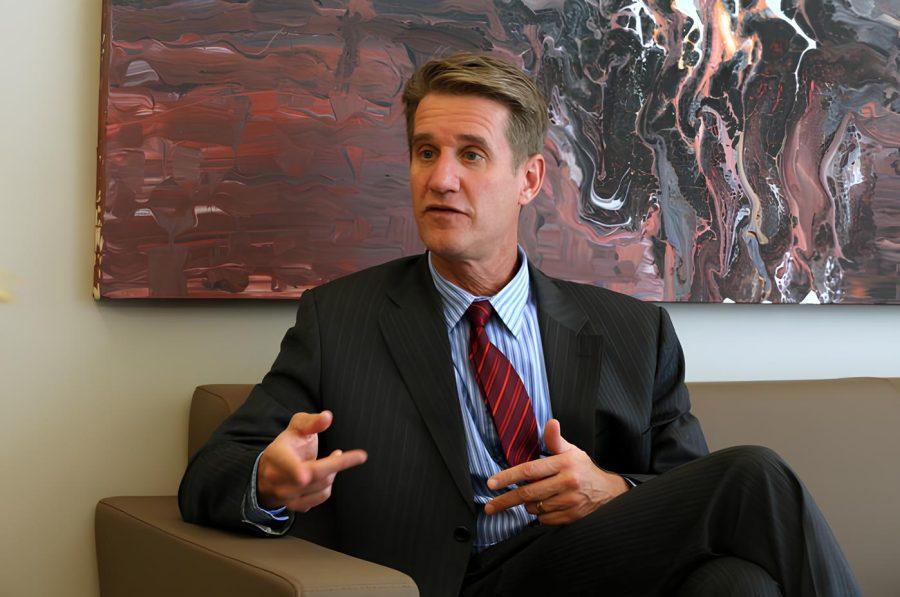
In an exclusive interview with EDnews, former U.S. Ambassador to Azerbaijan Matthew Bryza explains the key disagreements between the parties, assesses the balance of power, and analyzes what outcomes can realistically be expected from the talks.
- What are the main points of disagreement between the United States and Iran at present?
At present, there is a complete lack of consensus between the United States and Iran. This is reflected in the contradictions between the 15-point proposal presented by the United States and the 10-point proposal put forward by Iran. Although President Donald Trump initially stated that Iran’s 10 points could serve as a basis for negotiations, the White House later declared these proposals entirely unacceptable, adding that Iran has since submitted a new package of proposals.
For this reason, the exact nature of the current disagreements is not entirely clear, as the details of Iran’s revised proposals have not been disclosed.
Nevertheless, according to international media reports, three or four key contentious issues stand out.
The first issue concerns the free transit through the Strait of Hormuz. The United States demands that there be no restrictions, while Iran seeks to preserve its sovereignty and maintain a degree of control.
The second issue relates to Iran’s nuclear program. The United States insists that Iran must not enrich uranium, whereas Iran remains determined to continue this activity.
The third disagreement involves Israel’s actions in Lebanon. Iran demands that Israel halt its attacks against Hezbollah, while the United States refuses to adopt such a position.
The fourth issue concerns Iran’s demand for compensation for economic damages resulting from the war, which the United States rejects.
At the same time, there have been signals in recent days suggesting the possibility of certain compromises. Following President Trump’s announcement of a two-week ceasefire and his statement that civilian infrastructure would not be targeted, reports from Washington indicate that the United States may allow Iran, under certain conditions, to generate revenue from transit through the Strait of Hormuz. This would likely be implemented within a joint mechanism.
- Which side enters the negotiations from a stronger position — Washington or Tehran?
It is difficult to determine definitively which side holds the stronger position. Tehran has certain advantages, as its primary objective is to ensure the survival of the regime; if achieved, this can be presented as a success. At the same time, Iran understands well that President Trump seeks to withdraw U.S. forces from the conflict, restore stability in energy markets, and prevent rising inflation ahead of congressional elections.
On the other hand, Washington believes it has greater leverage due to its military capabilities and the strikes it has carried out on Iran’s military infrastructure, including ballistic missile production facilities.
As a result, both sides enter the negotiations believing they hold the upper hand.
- What could be the possible outcomes of the Islamabad talks? What will happen if the negotiations fail?
It is unlikely that this round of talks in Islamabad will immediately result in a political agreement that ends the war. Most likely, additional phases of negotiations will be required.
Iran appears prepared to continue the conflict as long as it believes it retains sufficient leverage. At the same time, Israel demonstrates an interest in continuing military operations. Although President Trump is attempting to reduce U.S. involvement, he also believes that increased pressure could lead to a more favorable agreement.
If the negotiations fail, there is a high likelihood of renewed escalation in hostilities. In such a scenario, oil and liquefied natural gas prices are expected to rise significantly. Currently, there is a gap between spot oil prices and futures prices, reflecting market expectations that the conflict may be resolved. For example, the current price of oil stands at approximately $135 per barrel, while prices for future deliveries are lower.
If the talks collapse, market optimism will dissipate, and both spot and futures prices are likely to increase.

.jpeg)



.jpg.jpeg)