.jpeg)
Geopolitical processes in the South Caucasus are evolving rapidly, and new realities are taking shape in the region. Georgia’s foreign policy, its multi-vector approach, and the future of the Baku–Yerevan peace process are among the key topics on today’s international agenda.
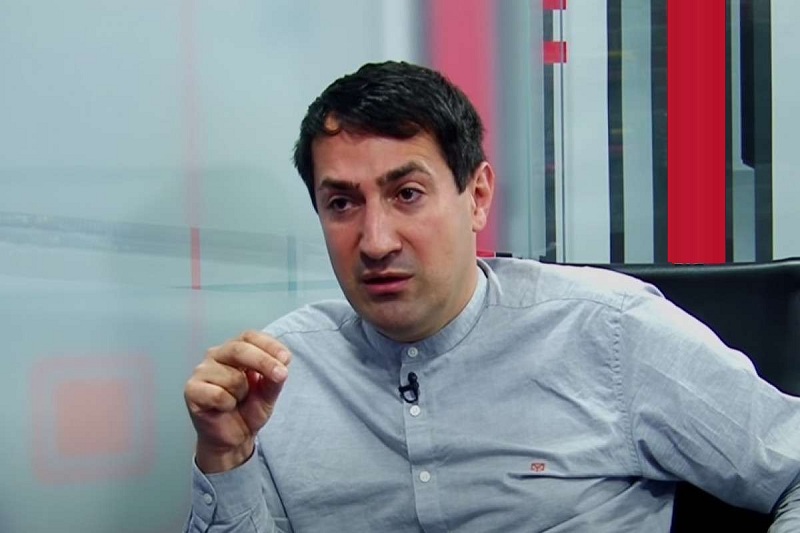
EDnews discussed these important issues with Nino Burjanadze, former Speaker of the Georgian Parliament, who also served as acting President for a period and is considered one of the most experienced political figures in the region.
— Recently, certain tensions have been observed in relations between Georgia and the European Union. How do you assess Tbilisi’s current position and steps in the process of European integration?
Yes, unfortunately, certain contradictions between Georgia and the European Union have indeed emerged recently. Undoubtedly, this is regrettable. However, I am confident that the current difficulties on the path to European integration are temporary in nature, and that Georgia will be able to find common ground with the European Union. The overwhelming majority of the Georgian population believes that EU membership is extremely important for the country. This position is also expressed by the country’s leadership.
At the same time, existing problems remain noticeable. Their resolution requires serious and diligent effort, and I very much hope that this work will be carried out so that, ultimately, we can establish normal and constructive relations with the European Union.
— Georgia’s expanding ties with China, Turkey, and Central Asian countries are often described as a multi-vector policy. Is this a genuine alternative, or rather a consequence of difficulties in relations with the West?
As for expanding relations with China, Turkey, and Central Asian countries, I fully support this approach. I have always opposed the notion of choosing between sides—either the European Union or the East; either Europe or Russia, Turkey, or China. Even the European Union itself actively develops relations with China, Central Asia, and Turkey, with Turkey being an important trade and economic partner.
Therefore, a multi-vector policy is not an alternative but a correct and rational choice. The key point is to ensure that the development of relations in one direction does not come at the expense of another.
China is one of the most important countries not only for Georgia, but also for the United States and the European Union. It has significant future potential. Central Asia and Turkey are our neighbors, and it is essential to maintain stable relations with neighboring countries. Important transport corridors of great significance to Georgia pass through Turkey.
For this reason, it is not appropriate to criticize the expansion of cooperation with these regions. Georgia, located at the crossroads of major trade routes, must make maximum use of its geographical position to develop its economy and strengthen stability.
The better Georgia’s relations with its neighbors and partners, the better it is for the country. In the context of globalization, a multi-vector approach is becoming even more important. We see that countries around the world are striving to expand cooperation.
I would like to emphasize once again: this is not an alternative to the European direction, but an opportunity to develop relations with all partners. Georgia can serve as a bridge between East and West. As early as the presidency of Eduard Shevardnadze, discussions were held about the concept of the Great Silk Road, in which Georgia was assigned a central role.
Today, increasing attention is being paid to the Middle Corridor, where Georgia can also play a key role. However, to realize this potential, it is necessary to maintain good relations both with Europe and with other regions.
— The conflict between Baku and Yerevan, which has lasted for more than 30 years, now appears to be nearing its end. The peace process is developing quite dynamically. Looking back, what notable moments have you observed in this diplomatic effort? Are there any memories you could share with us for the first time?
First of all, I would like to welcome the rapprochement between Baku and Yerevan, which contributes positively to ending the 30-year conflict. I believe that it is extremely important at present to continue negotiations toward a comprehensive peace agreement between the two countries. I wish both sides success in this important process.
It can be noted that over the years this conflict has undoubtedly affected regional cooperation. Georgia has, in a sense, been fortunate to maintain good relations with both Azerbaijan and Armenia. Nevertheless, the long-standing conflict between the two has created difficulties for the development of full-scale regional cooperation.
I have always believed that the day would come when cooperation between Baku, Yerevan, and Tbilisi would become possible—and in my opinion, that moment has now arrived. This would give a new impetus to the development of the entire region. I sincerely welcome these positive changes and wish your President and your people great success in this direction.
It is worth noting that numerous meetings involving representatives of Azerbaijan and Armenia have previously been held in Tbilisi. Georgia, relying on its good relations with both countries, has sought to play a mediating role. I believe that the normalization of relations between Azerbaijan and Armenia will also benefit Georgia, as it will create opportunities for new trilateral and multilateral projects.
Undoubtedly, this will contribute to the region’s development, as stability is of crucial importance. When a conflict exists between two countries, it is very difficult to speak of stability.
At the same time, Georgia still faces painful unresolved issues, such as the territorial conflicts concerning Abkhazia and South Ossetia. I hope that in the near future we will be able to reach peaceful agreements with our fellow citizens. I have always considered Abkhazians and Ossetians to be our brothers and sisters, and I continue to do so.
Resolving conflicts requires many factors: it is important to demonstrate that Georgia is an attractive country capable of providing a достой life for all its citizens. Geopolitical decisions are also necessary. Despite the difficulties, I hope that all conflicts in the Caucasus can be resolved peacefully.
— In Baku, you are known as a politician who is a friend of Azerbaijan. It is also known that you met with national leader Heydar Aliyev. Could you share your memories of him with us?
I am very pleased that you highlighted my friendly relations with Azerbaijan. I truly consider myself a sincere friend of the Azerbaijani people. Whenever I visit Baku, I feel great warmth both from politicians and ordinary citizens.
I wish your people peace, prosperity, and well-being. I remember my relations with Heydar Aliyev with special warmth and will never forget them.
One of my first foreign visits after being elected Speaker of the Georgian Parliament was to Azerbaijan, when Heydar Aliyev was President. That meeting left an indelible impression on me.
Despite his vast political experience, he showed me not only a statesmanlike attitude but also a human, almost paternal approach. He helped me feel confident and demonstrated that it was a dialogue between equals.
I also recall that he treated with great respect a request conveyed by His Holiness Ilia II, Catholicos-Patriarch of All Georgia, and the issue was resolved almost immediately.
Every meeting with him left a deep mark on my memory. I will always remember him with great respect and gratitude.
— How do you assess the main directions of the foreign policy pursued today by President Ilham Aliyev? Can his successful strategy regarding Karabakh be considered a model for other states?
I would like to note that I highly appreciate the continuation of the friendly relations that have already been established with President Ilham Aliyev. He has worthily continued his father’s course and is pursuing a well-considered policy in the interests of the state.
I can see the large-scale transformations taking place in Baku—it is impossible not to notice them.
As for the Karabakh strategy, every conflict is unique, and copying models directly is not always effective. Yes, experience should be studied, but each state must choose its own path.
In Azerbaijan, this strategy has worked, and today we see progress toward a peace agreement with Armenia. I hope this will lead to long-term peace and cooperation.
Finally, I would like to highlight the important role of Azerbaijanis living in Georgia. They are достой citizens of the country and have always demonstrated solidarity.
In particular, I was deeply moved by their behavior during the period of mourning related to His Holiness Ilia II: they showed great respect and solidarity by voluntarily refraining from festive celebrations.
I express my deep gratitude to them for this attitude, for their kindness, and for their brotherly support during difficult and sorrowful times. This is not forgotten—it reflects a high moral spirit and awareness. It is a form of support that, I believe, the Georgian people and state should always remember and duly appreciate.
Once again, I express my sincere thanks to our brothers and sisters of Azerbaijani origin.
I am truly grateful to them.
Fatima | EDnews

.jpg.jpeg)