
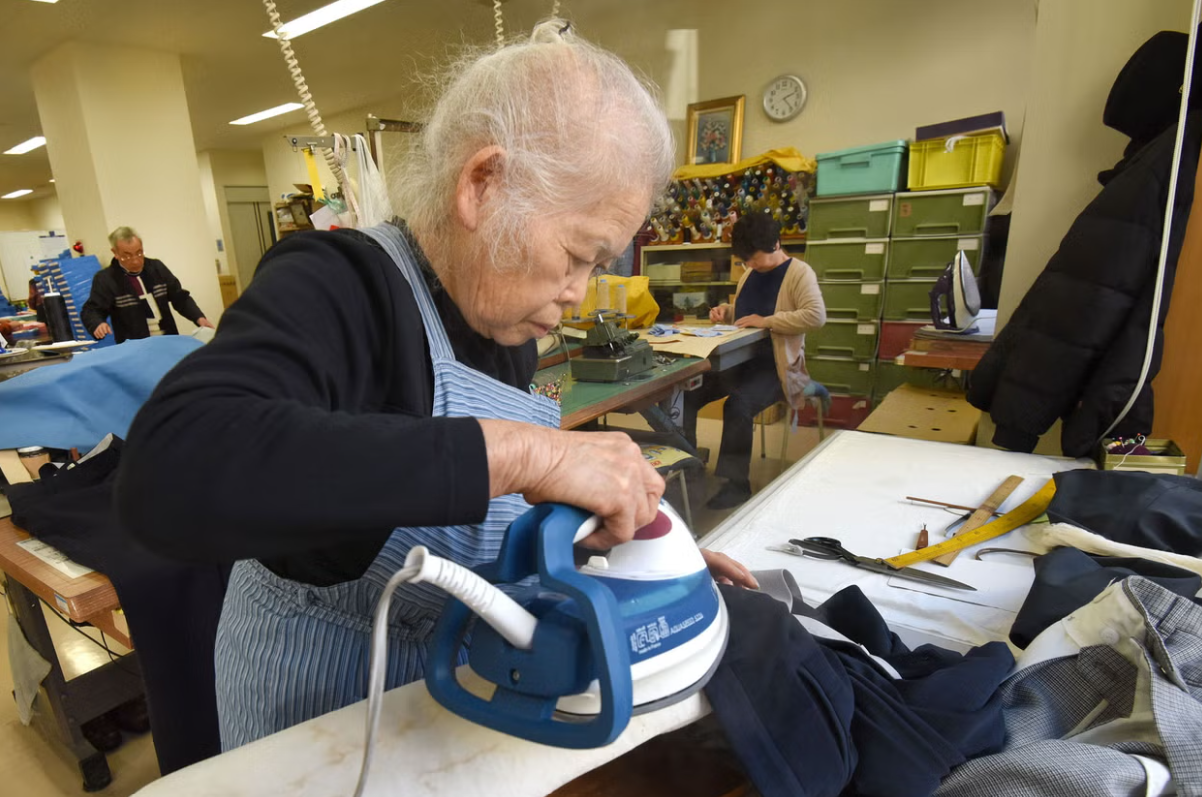
Nearly 40% of older adults in Japan say they want to remain in paid employment after the age of 65, with financial necessity emerging as the primary motivation, according to a government white paper on the country’s aging society.
The report shows that 39.7% of Japanese respondents aged 65 and older expressed a desire to continue working for income, a significantly higher rate than comparable surveys in the United States, Germany, and Sweden.
In the United States, around 24% of respondents in the same age group said they would like to keep working, while the figure stood at roughly 19% in both Germany and Sweden, highlighting Japan’s distinct demographic and economic pressures.
The findings come as Japan continues to grapple with one of the world’s most rapidly aging populations and a shrinking workforce, which is placing increasing strain on pension systems, healthcare services, and labor supply.
According to the white paper, the most commonly cited reason for continued employment among older Japanese adults was financial need. Other respondents said working helped them maintain physical health, stay socially engaged, and slow the effects of aging.
The trend has also contributed to a growing reliance on older workers across industries, as employers attempt to offset chronic labor shortages.
The report suggests that for many seniors in Japan, the decision to remain in the workforce is driven not only by personal preference but increasingly by economic necessity.






.jpg.jpeg)