

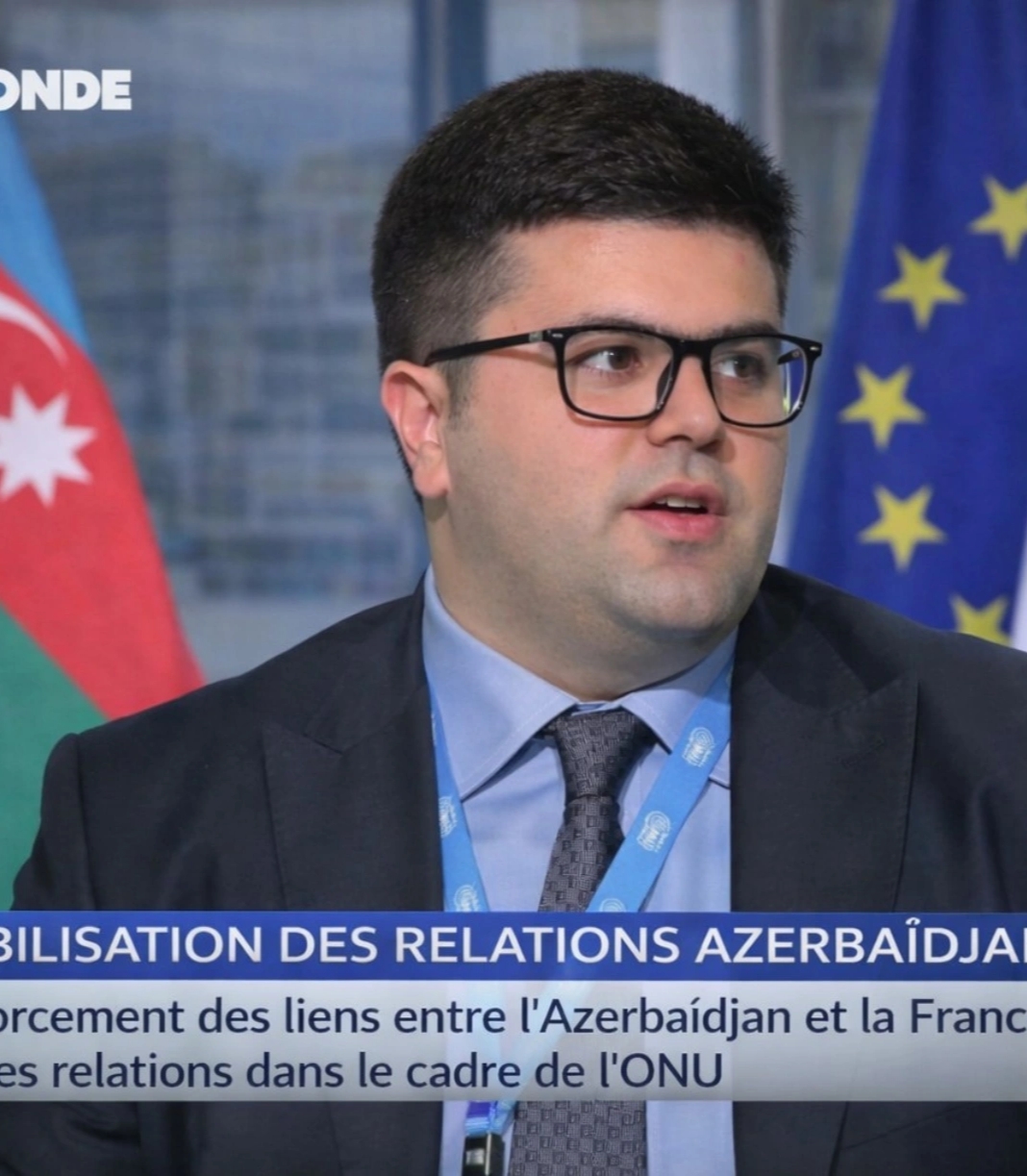
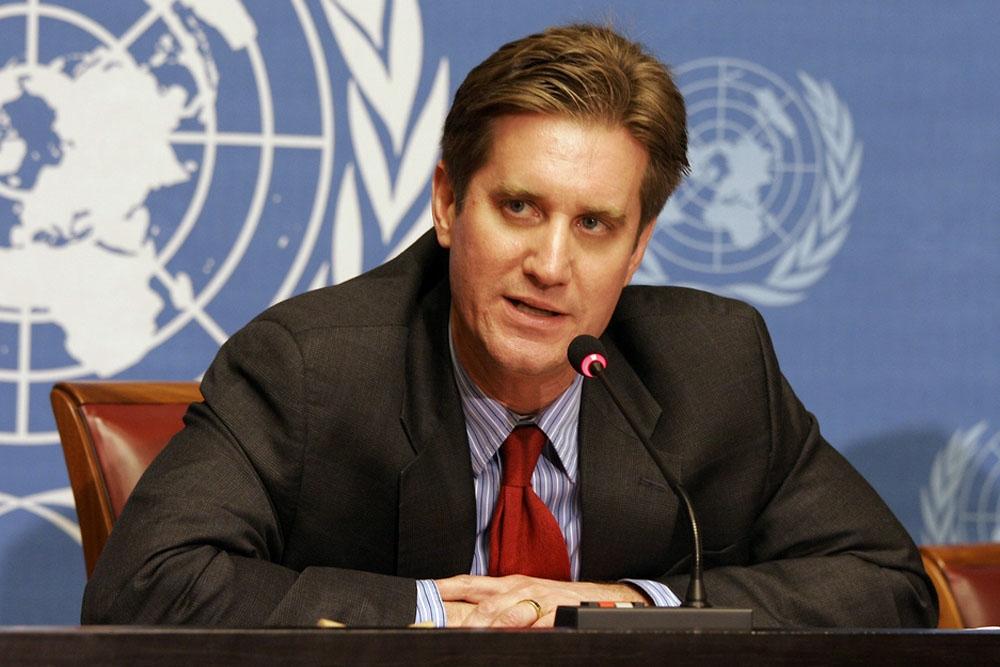
"Russia is something that not only in Argentina but in the whole Latin American region is widely recognized and accepted as a reality in world politics" political scientist Paulo Botta told Eurasia Diary
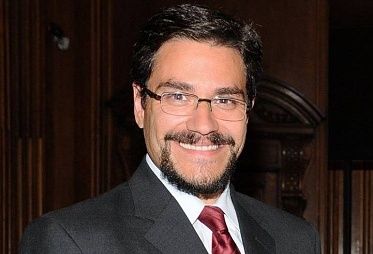
Paulo Botta - The head of the Eurasia Department of the Institute for International Relations at National University of La Plata
Argentina has established as one of the key foreign policy priorities to develop the contacts with the G-20 member countries. During 2018 Argentina will host, as pro tempore chairman, the summit of chief of government and state of this forum.
Russia is, as you can imagine, one of the most important partners on this forum. At the same time Argentina and Russia, after 150 years of consular relations and 132 years of diplomatic relations, had established in 2008 a Comprehensive Strategic Partnership between the two countries.
As a consequence of that Argentina and Russia maintain not only a growing bilateral relationship but also a multilateral one on G-20 and other international organizations.
Needless to say that the growing importance of Russia is something that not only in Argentina but in the whole Latin American region is widely recognized and accepted as a reality in world politics.
Political relations
On the political and diplomatic area, Argentina-Russia relations are a good example of mutually beneficial relations.
If we consider the visits of high level officials (Presidents, Prime Minister, Ministers of Foreign Affairs, etc) there is no doubt that we are in one of the best moments of our bilateral relations. Argentina, in this regard, is not an exemption and other Latin America countries are on the same situation.
In order to generate a certain analytical framework I would say that Latin America, from Moscow, includes three areas: Brazil (which it is an area itself due to its importance), Bolivarian countries (we can include Venezuela, Cuba, Nicaragua and Bolivia) and a third one which includes important countries in terms of political and economic contacts (Argentina, Mexico, Paraguay, Uruguay). In each of those areas priorities are different and the emphasis on political or economic issues and its pace depends on a case by case basis.
Back to Argentina, Russian Deputy Minister of Foreign Affairs, Mr. Serguei Riabkov, visited Argentina this month to continue the political bilateral dialogue and next year there will be a presidential visit: The Russian president to Argentina during the G-20 summit and the Argentinean president to Russia.
One of the most important agreements was the one celebrated in 2009 on visa exemption which allows Argentinean and Russian citizens to visit the countries without any specific requirement. This is one of the key factors in order to develop tourism and for sure will become extremely important next year during the 2018 Soccer World Cup in Russia.
We need to note that Argentina has reached similar visa exemption agreements with other members of the Eurasia Economic Union as Armenia, Belarus and Kazakhstan.
Commercial relations
If we consider the commercial relations between Argentina and Russia, and taking into account the official statistics, this is the situation:
In 2016 Russia was Argentina 33rd trading partner regarding Argentinean exports (less than 1% of the total), representing 490 million of U$S. It is important to mention that in 2008 there was a peak of 980 million of U$S.
Regarding imports in 2016, they reached 393 million of U$S and the peak was in 2013 with 1700 million U$S. Russia is the 23rd partner of Argentina.
Unfortunately this is not an Argentinean trend only, if we consider MERCOSUR countries (Argentina, Brazil, Paraguay, Uruguay and Venezuela), there is the same trend.
Exports in 2016 were 3.500 million U$S, the peak was in 2011 when they represented 5.800 million U$S.
On the other hand, imports from Russia reached a peak in 2013 (5.200 million U$S) and in 2016 they were 2.660 million of U$S.
Taking it into account we can say that the last five years commercial relations were diminishing as a consequence of the crisis in Latin America and in Russia as well.
Fortunately, this situation is changing. During the first months of the present year there was a growth of 17% comparing with the previous year on the Argentina-Russia bilateral trade and there are positive signs that can reflect a recovering commercial relation.
It is important to note that the private sector has a great responsibility on the developing of those commercial links, companies should participate on sectorial fairs, organize commercial missions, appoint representatives, etc. We need to develop personal and cultural links before the commercial ones.
Besides this, we need to mention other areas as for example the activities of Russian companies as Rosneft and Gazpron in Latin America, not only as investors in oil and gas activities but also providing and transferring know-how in terms of technology and management.
Other companies as Rosatom and Transmashholding, have plans to invest and to develop activities in the region on the nuclear and railway machine-building market respectively.
A third area that we need to consider is the one related to investing projects on infrastructure on several Latin American countries, from Argentina to Nicaragua.
One of the most promising areas of cooperation is the cooperation between Eurasian Economic Union and MERCOSUR. Since 2014 meeting was hold between representatives of both regional organizations in order to analyze possibilities of agreements on customs and phytosanitary issues.
Academic and cultural relations
We should not forget the cultural area and its importance on bilateral relations. In Argentina, the Russian community is quite important. The first wave of Russian immigrants arrived at the end of the XIX century and one of the cultural milestones of this immigration is the Russian Orthodox Cathedral build in downtown Buenos Aires.
A second wave arrived in the 30s and 40s of the XX century and a third one after the end of the Soviet Union.
This Russian community was responsible for the first Russian language coursed in Argentinean Universities and as a consequence of that and during the XX century the interest on Russian language, literature and history spread on Argentina.
Nowadays, “Casa de Rusia” (House of Russia) an institution depending of Rossotrudnichestvo is one of the leading institutions on this area offering as well scholarships to Argentinean students interested in studying in Russia.
There is a clear growth of the interest on Russian language during the last decade, a result of the growing presence of Russia on world politics.
Even the Argentinean Diplomatic Academy (National Foreign Service Institute) where I teach, has increased the classes of Russian language due to the interest of the future diplomats.
The Federal System of Media and Public contents has signed a Memorandum of Understanding with the Russian Ministry of Communication to increase the exchange of contents and even coproduction of TV shows.
Conclusion
There are two important elements that we must take into account when we analyze Argentina-Russian relations: The first one is that besides some reports, there are no significant changes with the new administration of Argentina, i.e. President Macri, who took power on December 2015. Russia continues as an important partner on many areas.
The second one is that this is not an isolated Argentinean policy but other Latin American countries share the same idea.
Latin America is not an isolated area in world politics, and its leaders understand that we are in a multipolar world where Russia has an important role to play.


.jpg.jpeg)