Law, tolerance and disarmament
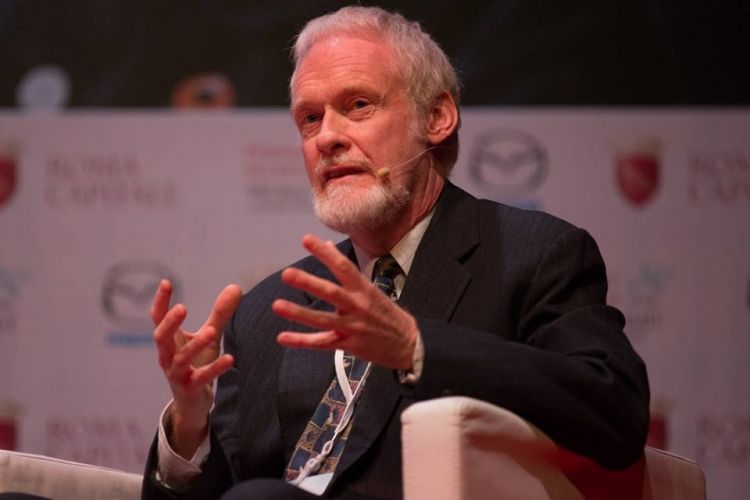
Law, tolerance and disarmament are three notions that can bring the world peace. The Secretary General of International Peace Bureau (IPB), Colin Archer believes that if followed them stability would be settled globally.
Secretary General of IPB Colin Archer talked in his exclusive interview to Eurasia Diary about peace, humanity, wars and conflicts, nuclear proliferation and disarmament and media.
The world is not as it seems on TV screen
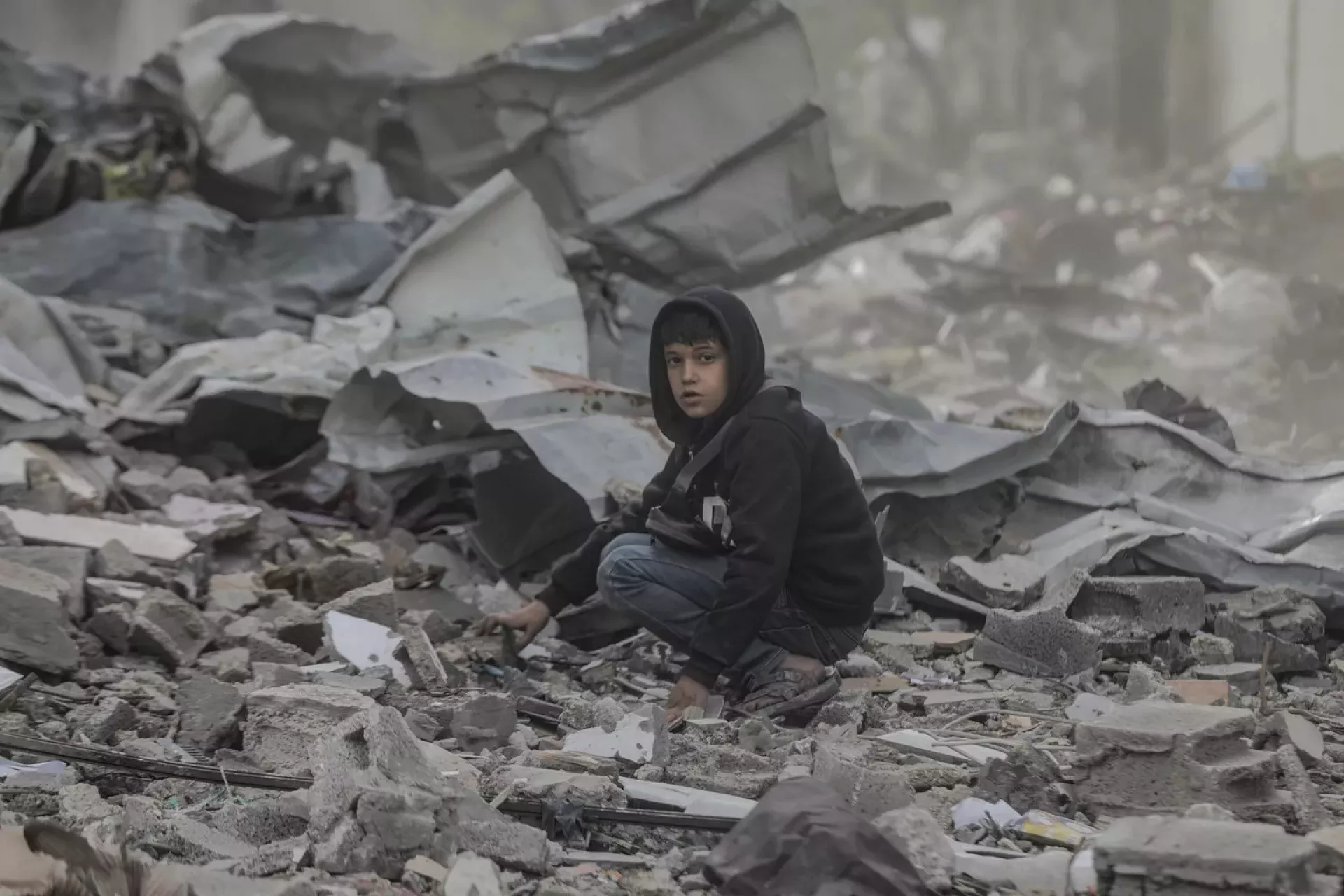
It is a mistake to think that the world is like as it is on the TV with killings, assassinations and bombings. That is the world presented by media. It is not true that there are conflicts and violence everywhere. There are many countries where there is no war and no violence. Even in some countries where there are conflicts (frozen) ongoing, daily life is quite peaceful. That is why one should not use news media to understand the life. Life is not like that. War is not the norm. The normal thing is the peace.
Like national, like international
It is true that there are a number of serious conflicts threatening the world peace. However, there are only about four conflicts with ten thousands of death tolls. Just think about the worst cases such as Iraq, Syria Afghanistan and situation in Nigeria. And there is another list of ten more conflicts where the number for the last twelve month is between one and ten thousand, such as Kurdistan, Pakistan, Mexico, Yemen, South Sudan and Ukraine.
These are serious problems but not the entire world is on fire. The world has 196 states and most of them are not at war. However, one thing is unexceptional for each state that we all try to find a way to solve these conflicts. And the way to do this should be just like we do with the conflicts at national level: we take it to the court, judges. At the international level we should do the same. We should go to the international court system rather than taking arms. That is the IPB’s basic position. We are in favor of disarmament and of international law.
Poverty does not mean war
IPB focuses on financial sides of conflicts. The key thing for us is the economy of war. Some critics relate the conflicts to economy saying that conflicts occur in underdeveloped countries. No doubt that not all countries are in one box or in another.
However, to use the terms developed/underdeveloped is not so useful now because there are so many complex characteristics of a single state economy. And I think it is better to think about it as a global community and as a global economy. Not all of the Pakistan is on fire: Except the country’s North West regions where the situation is serious, the rest of the country is peaceful.
So it is true however that the majority of serious conflicts are in poor countries and clearly, the poverty is one factor bringing out violence. Yet another reason is the duration of the conflict. Some of the conflicts are long-running because they don’t have institutions of government to resolve the problem and to take it to the court or make a political deal that will satisfy the leaders of the conflict parties.
Yes, there is economic correlation but it is not just about poverty. There are many poor countries where there is no war. Think about Gabon, Benin or Uruguay. These are relatively poor countries, but is there war in these countries? So let’s just don’t say that the poor means war.
Military spending comparable to times of ‘Cold War’
According the Stockholm based research institute the total number of military spending is $1.700 billion in a year. That is a high figure that is even comparable to the times of Cold War when the Americans and the Russians were threatening global destruction with nuclear weapons. And we now are spending even more than that.
One of the big reasons is the so called ‘War on Terror’ that started with the 9/11 event when the Americans started pushing the states for the military response. As a result, governments, NATO states basically have increased the military spending dramatically.
Today, we see the rising China which is to catch up the world military giants, such as the U.S. Of course, it has a long way to go.
There are other rising powers such as Russia, India and North Korea and no coincidence that we see authoritarian trends in those countries. These are trend towards greater militarism that we want to combat by our message of disarmament, sustainable development, and peaceful conflict resolution by using international law and promotion of human rights.
Disarmament for sustainable development
The problem is that governments invest enormous money on military system. IPB’s second battle after disarmament is to achieve sustainable development. The question we tackle is of military spending and budgets. That is what we focused on in our campaign and Global Days of Action on Military Spending which began in 2011. First to reduce the military budget and then to make assure that the money that released from that is then spent for the benefit of the society on sustainable development projects. These are desperately important and urgent needs such as protection human rights, promotion of women rights and jobs for young people. These require government investments which are spent on the military sector.
It would be much better for the government to spend a bulk of the money (not necessarily the all) for social welfare by transferring the funds from military sector.
Nobel Prize Stereotypes
There are people fighting for the goals mentioned above such as well-known Nobel Prize winners for disarmament. People do assume that the vast majority of the Nobel winners are no longer active once they got the prize.
Albert Nobel, the inventor of dynamite who thought the weapons will end the sufferings has towards his death realized that the weapons were not the answer. The answer he reached was that, ‘We need to promote peace by any means we can reach’. That is why the missions are very diverse.
Each of these Nobel winners is active in different fields. While some people go with environmental contributions some might ask what it has to do with peace. Well, there is a connection as the climate change is likely to cause to serious disruptions such as migration, refugees and that can cause to a conflict, create a war. Not everybody realizes that and people might think that the Nobel Prize has gone wrong.
For example, Shirin Ebadi, the first Muslim price winner. She is someone who stood up for human rights in Iran and continues that fight against the very repressive government of Iran. Or Jody Williams who struggled for international campaign for banning the landmines. She has created her own initiative for the Nobel Prize for promoting women’s role in peacemaking. Now she is active in prohibition of introduction of arm drones which is a new trend. Or the Jimmy Carter who was sent to North Korea to negotiate for nuclear deal.
People to People Peacemaking
Conflict resolution can be underlined as the third one of IPB’s ultimate aims following disarmament and sustainable development. IPB’s is worried about conflicts such as Nagorno-Karabakh that escalated in the beginning of April. From a conflict resolution perspective what is required is federal solution. And an example would be the Northern Ireland which seemed like endless conflict.
Thanks to the diplomacy between the many parties solution has been reached. That is why the local parties need to be involved. A solution would be to have possibility of people living together but controlling their own lives with political institutions. It does not necessarily mean that Nagorno-Karabakh to been Armenia’s or Azerbaijan’s. It has to be a place with relations with each of the societies. This requires willingness to talk. And politicians are often refraining from talks with other sides because they are afraid of being called as a traitor. This is where civil society comes in. One should not be afraid to talk to other. Civil society can go ahead of politicians; they can do what politicians can’t. I would urge people to talks with their counterparts, dare to talk. People to people peacemaking. And only then politicians will realize it is not wrong if it makes security, safety and prosperity for everyone.
Colin Archer works for the International Peace Bureau in Geneva (IPB), founded in 1891. The International Peace Bureau is dedicated to the vision of a World Without War. IPB has UN Consultative Status since 1977 and is the Secretariat for the NGO Committee for Disarmament (Geneva). Its main programme centres on Disarmament for Sustainable Development, of which the Global Campaign on Military Spending is a key part.
.jpeg)

.jpg.jpeg)