
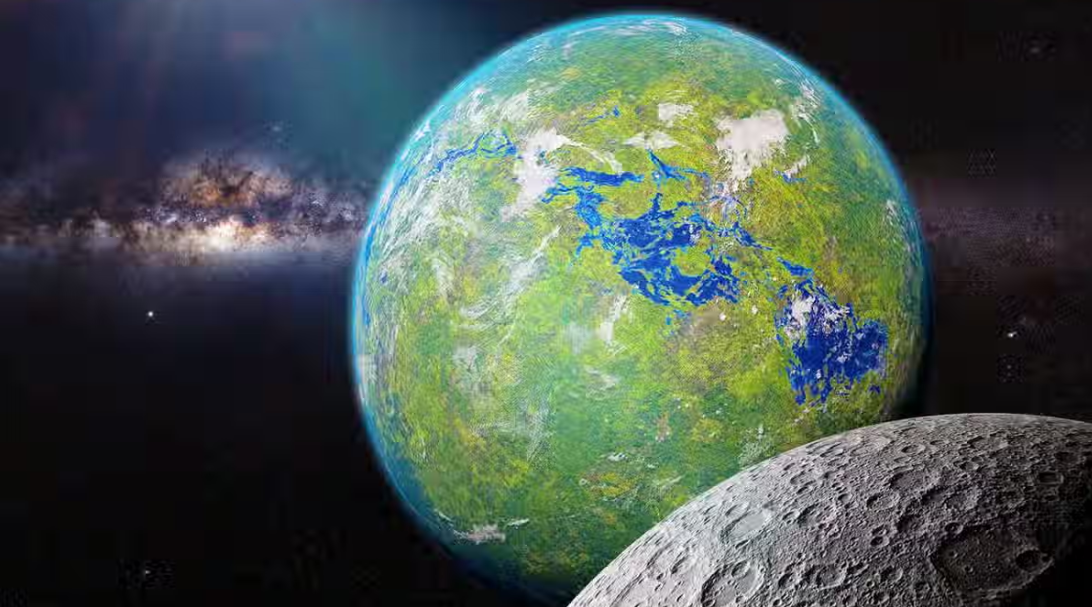
Astronomers have obtained significant new data about a recently identified exoplanet named GJ 3378b, which may have conditions suitable for life outside the Solar System.
The planet is located approximately 25 light-years from Earth and appears to be smaller than previously estimated, with a potentially rocky composition. This raises the possibility that it could be one of the more promising candidates for habitability.
Researchers say GJ 3378b belongs to the category of “super-Earths” and orbits within the habitable zone of its star. This is the region where temperatures may allow the presence of liquid water. According to estimates, the planet receives about 90% of the energy Earth receives from the Sun.
Lead researcher Paul Robertson, an astronomer at the University of California, said that a distance of 25 light-years is relatively close in cosmic terms and that GJ 3378b is one of the most promising exoplanets in the solar neighborhood.
However, scientists emphasize that being in the habitable zone does not confirm the existence of life on the planet.
At present, it is still unknown whether GJ 3378b has an atmosphere. Researchers note that strong flares from its red dwarf star may have stripped away any atmosphere over time. Further observations are planned to better understand the planet’s composition and conditions.








.jpg.jpeg)